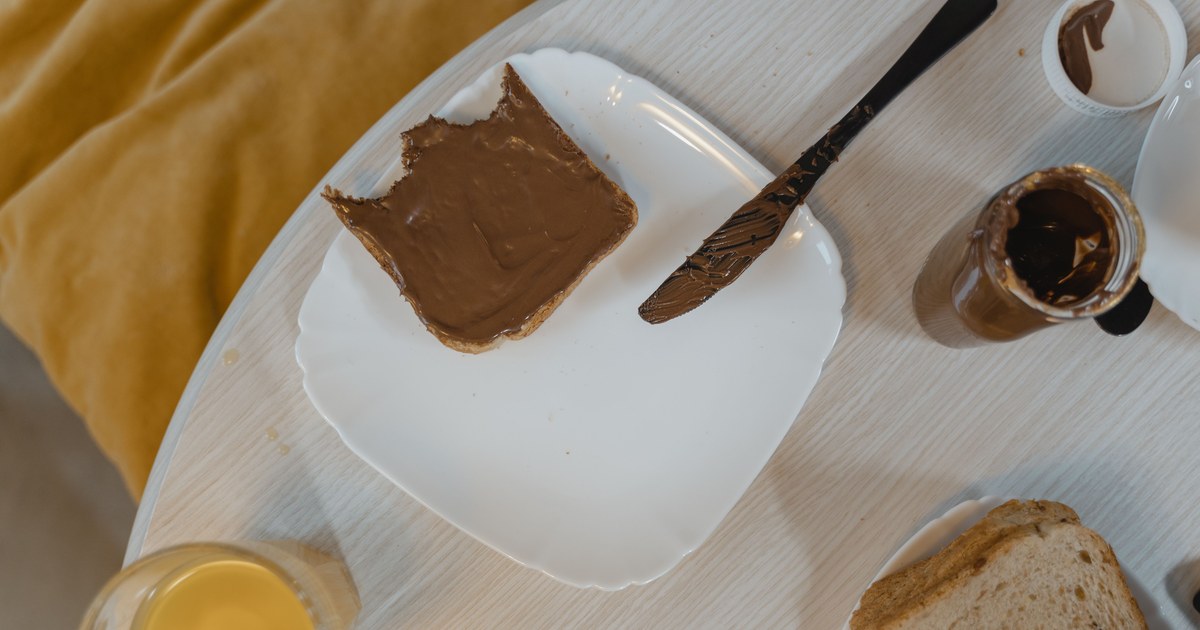
A jar of chocolate hazelnut spread sits in an odd place in the halal conversation. It is sweet, it is processed, it is imported, and it has the general look of a product with something hidden in it, so it collects rumours the way confectionery does. Readers ask “is Nutella halal” because they have heard about gelatin in it, or alcohol in the flavouring, or an animal fat behind the creaminess. The published panel is short enough to check the first two claims in about thirty seconds, though the third turns out to need one more line than most shoppers expect.
Is Nutella halal is a question the label answers more fully than most, as long as you read the actual retail label rather than the brand’s own marketing copy. Ferrero’s marketing page names seven ingredients, but the printed US retail label carries an eighth: whey. No gelatin and no alcohol appear on either version. Certification, where it exists, is a claim about a specific supply chain rather than the brand as a whole.
The panel, as printed on the jar
Ferrero’s own US product page gives the ingredients as sugar, palm oil, hazelnuts, skim milk, cocoa, lecithin as emulsifier, and vanillin described as an artificial flavour. The ingredient panel actually printed on current US retail jars, as recorded by Open Food Facts for several US Nutella UPCs, reads: sugar, palm oil, hazelnuts, cocoa, skim milk, whey (milk), lecithin as emulsifier (soy), and vanillin, an artificial flavor. The European pack is a third version again, expressed in the European labelling style with percentages declared: sugar, palm oil, hazelnuts at 13 per cent, skimmed milk powder at 8.7 per cent, fat-reduced cocoa at 7.4 per cent, emulsifier lecithins from soya, and vanillin, with no whey listed. A reader working from the brand’s website alone would not see the whey that is actually on the US jar in front of them.
Two things follow. The first is that the ingredients people worry about most are still absent from every version. Gelatin is absent. Ethanol and any alcohol-carried extract are absent. There is no tallow, no lard, no unnamed shortening and no glazing agent. Anyone who has been told the jar contains gelatin can put that down.
The second is that the questions which remain are genuinely narrow, but whey moves one of them back onto the list. Sugar, palm oil, hazelnuts and cocoa are plant materials, and palm oil’s usual criticism is environmental rather than a question about animal sourcing. Our post on the three ingredients worth checking in chocolate covers why cocoa-based products usually concentrate their real questions in the emulsifier, the flavouring and, on the US pack, the dairy by-products rather than in the chocolate itself.
The emulsifier
Lecithin does the work of keeping the oil and the solids together, and on both the European pack and the US retail label it is declared as soy: lecithins from soya on the European panel, lecithin as emulsifier (soy) on the US one. That is the source stated on the label, which is the whole point: the panel names a plant.
Soy lecithin is the ordinary case where the label does its job. Our post on soy lecithin sets out why this is usually the easy line on a European or American ingredient list, and the American Halal Foundation’s guide to halal and haram ingredients states the general principle from the certifier’s side, listing lecithin as an additive that must be derived from halal sources. When the pack says soya, the source condition is answered on the pack. When a label says only “emulsifier” with no source, the situation is different, and that is why an ingredient like glycerin, which can be animal, plant or synthetic and rarely says which, stays open in a way this one does not.
Vanillin is not vanilla extract
This is the line most worth understanding, because the two words sound like the same ingredient and are not.
Vanilla extract is vanilla flavour drawn out of beans into a solvent, and the solvent is usually ethanol, which is why certifiers have a genuine and well-documented discussion about it. Vanillin is a single flavour compound. Wikipedia’s article on vanillin records that synthetic vanillin is now used more often than natural vanilla extract in foods, beverages and pharmaceuticals, that roughly 85 per cent of it is synthesised in a two-step process from the petrochemical precursors guaiacol and glyoxylic acid, and that around 15 per cent of world production is still made from lignin waste. Neither of those routes is an animal route, and neither is an alcohol extraction.
Ferrero’s US page labels the vanillin on this product as an artificial flavour, which is consistent with the synthetic routes above. That does not mean every flavouring line on every product is settled by the same reasoning. IFANCA, the Islamic Food and Nutrition Council of America, places artificial and natural flavourings in the Investigate Further section of its Halal Shopper’s Guide to Ingredients, describing them as small-quantity components that can contain subcomponents derived from haram animals, from alcohol, or from halal animals slaughtered by non-Muslims, and it asks shoppers to take the question to the manufacturer. A named compound like vanillin tells you more than the catch-all phrase does, which is the difference our post on “natural flavors” and what the FDA definition allows is built around.
The dairy line, and what it does and does not raise
Skim milk, or skimmed milk powder on the European pack, is milk with the fat removed and the water taken out. Milk itself is not the contested part of a dairy ingredient in halal terms. The contested part is usually rennet, the coagulating enzyme used to make cheese, which can be animal-derived.
Milk powder does not pass through that step, so it is worth naming the distinction rather than treating all dairy as one category. Whey does pass through it, because whey is the liquid left over once milk has been curdled into cheese, and the coagulant behind that curdling is rennet. Our post on whey sets out why whey’s status follows the rennet used in the cheesemaking it came from, the same open question our post on cheese and rennet covers, rather than being settled by the fact that whey itself is “just” a dairy by-product. A reader who has learned to be careful about cheese should carry that same caution to the whey line on a US Nutella jar rather than assuming it does not apply. What a label cannot tell anyone, here as anywhere, is how the facility was run, what rennet a given supplier used, or what else was made on the same line. That is a certification question rather than an ingredient question.
Certification statements name specific supply chains, not a single global answer
The most useful thing to understand about this product is that a certification statement from the manufacturer is a claim about a specific supply chain, not automatically about the jar in your hand.
Ferrero’s own international food service FAQ states that Nutella is Halal certified and refers readers to the National Independent Halaal Trust for more information, without specifying which plants or markets that covers. Its Australian food service FAQ is more specific, stating that Nutella sold by Australian Food Service is sourced from Ferrero factories in Alba, Italy and in Lithgow, Australia, and is Halal certified. Read together, the two pages show why a broad brand-level statement and a plant-specific one are not interchangeable: the international FAQ tells you a certification exists somewhere in the business, while the Australian one tells you exactly which factories and which supply chain it actually covers. A shopper cannot assume the general statement extends to their own market’s jar without the same kind of specific confirmation.
That is the ordinary pattern for a large international brand, and it explains why two shoppers can both be right while disagreeing. One is holding a jar covered by a certificate in her market. The other is holding a jar whose recipe is identical but whose plant sits outside that certificate’s scope. The ingredient list is not what separates them. The audit is. If certification matters to your decision, the thing to look for is the mark or the market-specific statement rather than the ingredient panel, and your own certifying body is the right place to confirm which plants its certificate covers.
The quick read at the shelf
Turn the jar and read the actual printed panel, not the brand’s marketing page. If it names sugar, palm oil, hazelnuts, cocoa, milk, a soya lecithin emulsifier and vanillin, no gelatin, no animal fat and no alcohol-carried extract is declared on it. If whey also appears, as it does on current US retail jars, that line carries the same rennet-sourcing question as cheese, not a settled one. If the emulsifier names its plant source, that line is answered on the pack. If the flavouring is given as vanillin rather than as vanilla extract or as an unnamed flavouring, you are looking at a single named compound with well-documented synthetic routes rather than at the open category IFANCA asks shoppers to investigate. If a certification mark from a body you follow appears, it covers the sourcing and the facility together, which the panel never can.
Zabihah reads the printed ingredient list and gives AI-assisted general guidance from it, so it can confirm what a panel names and flag the lines a named authority would want checked. It is not a fatwa and it is not a substitute for certification, and it reads labels rather than inspecting a plant or a supplier’s contracts. For the jar in your hand, an official halal certification and your own scholar or certifying body remain the deciding voices.
Sources
- Nutella Classic, published ingredients (Ferrero, nutella.com US)
- Nutella, European pack ingredient panel (Open Food Facts)
- Nutella, US retail ingredient panel (Open Food Facts)
- Ferrero Food Service FAQ (Australia)
- Ferrero Food Service FAQ: Certification
- Vanillin (Wikipedia)
- IFANCA: Halal Shopper's Guide to Ingredients
- American Halal Foundation: A Comprehensive Guide to Halal and Haram Ingredients