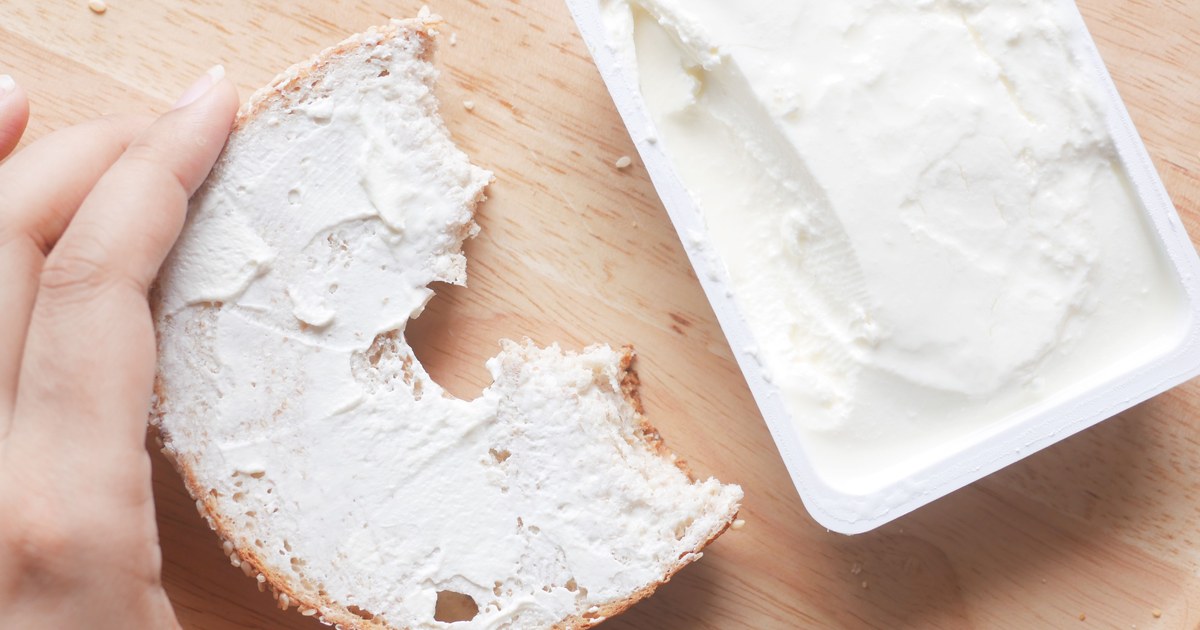
Cream cheese ends up in more of the week’s food than most people notice: on a bagel, in a cheesecake, stirred into a pasta sauce or a dip for a lunchbox. It is also a cheese, and cheese is one of the foods where Muslim shoppers have learned to hesitate, because of rennet. So it is worth knowing whether the hesitation carries over.
The answer to “is cream cheese halal” depends on how the particular cream cheese was set. The US standard allows clotting enzymes of animal, plant or microbial origin and lets them be labelled simply as “enzymes”, so an “enzymes” line leaves the source open. Some brands list only a cheese culture, which removes the rennet question but not every question.
That is a more useful answer than a flat yes or no, and the label in your hand usually tells you which case you are in.
What US rules say cream cheese is
Cream cheese has a legal definition in the United States. Under 21 CFR 133.133, it is a soft, uncured cheese with at least 33 percent milkfat and no more than 55 percent moisture, made from pasteurised dairy ingredients. The procedure the standard describes subjects the dairy ingredients to a lactic acid-producing bacterial culture and then adds one or more clotting enzymes to coagulate them, though it also allows any other procedure that produces a finished cheese with the same physical and chemical properties.
The clotting enzymes it permits are “rennet and/or other clotting enzymes of animal, plant, or microbial origin”. And on the label, the standard allows enzymes of animal, plant or microbial origin to be declared simply as “enzymes”.
That last clause is the key to the whole question. A US cream cheese label that says “enzymes” is legally allowed to leave you guessing. The same rule applies to many standardised cheeses, which is why our post on cheese and rennet and our explainer on enzymes on an ingredient list keep arriving at the same place.
The positions on enzymes and rennet
Named bodies read the enzyme question in documented ways, and they do not all agree.
IFANCA, the Islamic Food and Nutrition Council of America, explains that cheese enzymes can come from animal, vegetable or microbial sources. It lists pepsin from pigs as haram, notes that calf rennet may come from zabiha or non-zabiha calves, and states that microbial enzymes are not derived from meat and are halal.
On rennet from cattle not slaughtered according to Islamic rules, the schools differ. Islam Question & Answer records that the apparent opinion of the majority of Maliki, Shafi’i and Hanbali scholars treats such rennet as impure, while the view of Abu Hanifah, and one of two opinions narrated from Imam Ahmad, holds it to be pure. It also records that where the animal was slaughtered according to Islamic law, the four schools agree the rennet is pure. That difference is about rennet from permissible animals; it is not an argument about pig-derived enzymes.
So an “enzymes” line on a tub of cream cheese is a question whose answer depends both on the manufacturer’s source and on which of those positions you follow.
When the label lists a culture and no enzymes
Not every cream cheese has an enzymes line at all. Kraft Heinz lists the ingredients of Philadelphia Original Cream Cheese, on its own product page, as pasteurised milk and cream, salt, carob bean gum, and cheese culture. There is no rennet and no enzymes on that list.
That changes the question considerably. With no clotting enzyme declared, the rennet debate described above does not arise for that product. Carob bean gum is a plant-derived stabiliser. What is left is the culture.
Cultures are usually the least discussed ingredient on a dairy label, and for most shoppers they are not a concern. But certifiers do look at them. The American Halal Foundation’s requirements for halal cheese and dairy certification state that starter cultures must not be grown on substrates containing pork-derived peptones, blood or non-halal meat extracts, and that culture suppliers must provide halal compliance documentation for both the culture and its growth media. None of that is visible on a label, which is exactly why it is part of an audit rather than part of a shopping list.
Flavoured, whipped and spreadable tubs
The standard also allows stabilisers, up to 0.5 percent of the finished food, without naming which ones. The Philadelphia block uses a plant gum. Flavoured, whipped and reduced-fat products are separate products with their own ingredient lists, and they can carry more: additional stabilisers, flavourings, and in some products whey or other dairy components.
Whey is worth a specific mention. The cream cheese standard allows cheese whey as an optional ingredient, and whey carries the coagulant question of the cheese it came from, as our guide to whether whey is halal explains. A cream cheese whose own label lists no enzymes can still include whey from a cheese that was made with them.
So the plain block and the flavoured tub from the same brand can be two quite different reads. The name on the front is shared; the list on the back is not.
Cream cheese inside other foods
Cream cheese is often an ingredient rather than the product: in a cheesecake, a frosting, a filled pastry or a flavoured crisp. Our look at Doritos shows how cheese sub-ingredients get listed inside a seasoning. When cream cheese appears as an ingredient, a well-labelled product will usually list its components in brackets, and that bracket is where to look for “enzymes” or a culture.
The quick read at the shelf
Read the ingredient list for three things. If it says “enzymes”, the source is open, and the positions above, the manufacturer’s answer or a certification mark will have to settle it. If it lists a culture and no enzymes, the rennet question does not arise for that product, and what remains is the kind of culture-media question that only certification checks. If it lists whey, stabilisers or flavourings, each of those is a separate line to read.
Zabihah reads the printed ingredient list and gives AI-assisted general guidance from it, so it will flag an “enzymes” or whey line in a tub of cream cheese and tell you when a product lists culture alone. It is not a fatwa and not a substitute for certification, and it cannot see which culture media a supplier used or how a dairy runs its lines. For the final decision, an official halal certification and your own scholar or certifying body remain the deciding voices.