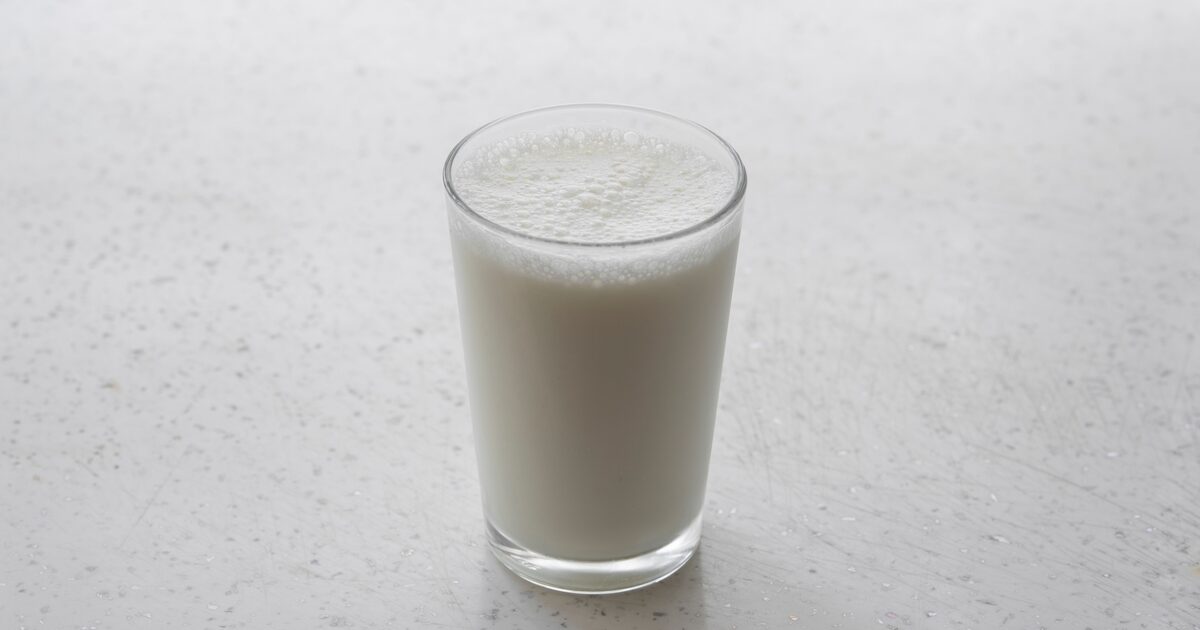
Whey turns up in more places than most shoppers realise: protein powders and bars, chocolate, bread, biscuits, baby formula, processed cheese and many “milk solids” listings. It is a dairy ingredient, which makes it look uncomplicated. The reason it appears so often in halal questions is that its status does not really depend on the whey at all.
The honest answer to “is whey halal” is that whey is a by-product of cheesemaking, so its status follows the enzyme used to make that cheese. Wikipedia’s entry on whey describes it as the liquid remaining after milk has been curdled and strained, a by-product of cheese or casein production. Because cheese is curdled with rennet, and animal rennet carries a genuine scholarly disagreement, the whey inherits that same open question.
Whey is the cheese question in a different form
To see why, it helps to follow where whey comes from. Milk is curdled into curds and whey, the curds become cheese, and the whey is drained off and often dried into whey powder or refined into whey protein. The coagulant that starts that process is rennet, an enzyme preparation. If the rennet is microbial or produced by fermentation, the sourcing is straightforward. If it is animal rennet from a calf that was not slaughtered according to Islamic rules, the Sunni schools of law reach different published conclusions, and if it were pig-derived the certifiers line up rather than divide.
So whey is not a separate problem to solve. It is the rennet and enzyme question reaching you one step downstream, in a powder rather than a wedge. That is exactly how IFANCA, the Islamic Food and Nutrition Council of America, frames it: in its Halal Shopper’s Guide to Ingredients it lists whey in the “Investigate Further” column and gives the reason directly, noting that the cheese the whey comes from may be made with enzymes from pork, calf, goat, or microorganisms. The source of the coagulant is the whole question.
The disagreement whey inherits
Because the coagulant decides it, the scholarly split over animal rennet carries straight through to whey. A published Hanafi answer on SeekersGuidance holds that rennet obtained from an animal slaughtered by a non-Muslim or a Muslim, in accordance with Islamic law or contrary to it, is permissible in all cases as long as the animal is not a pig, reasoning that the enzyme carries no flowing blood and so does not die when the animal dies. The other side is documented on Islam Question & Answer, which reports that the majority of the Malikis, Shafi’is and Hanbalis hold rennet from an animal not slaughtered according to Islamic law to be impure, while Abu Hanifah, and Imam Ahmad in one narration, hold it pure. The same answer closes by advising an ordinary Muslim to follow a scholar who guides him toward one of the two opinions.
Read together, those are two published, reasoned positions on the same substance, not one side being better informed than the other. Whey made from cheese set with that kind of rennet lands in exactly the mushbooh space the cheese does: undecided on the label in front of you, and a question for your own school and scholar rather than for an app or a website.
The route that removes the question
There is a clean way past the disagreement, and a large part of the dairy industry already uses it. IFANCA’s rennet FAQ notes that chymosin produced through biotechnology (fermentation) is halal and is not extracted from an animal. Microbial and fermentation-produced coagulants of this kind are widely used across the modern dairy industry. Whey produced from cheese set with a microbial or fermentation-produced coagulant does not raise the animal-rennet question at all. The trouble is that a whey powder or a “whey (milk)” line on a chocolate bar almost never records which coagulant made the original cheese, which is why the ingredient reads as doubtful when it stands alone.
What to do when you see whey
A halal certification mark from a body you follow is the strongest signal, because a certifier has traced the whey back to a coagulant it accepts. Without one, an unqualified “whey” is a component to investigate rather than a verdict: it may come from microbially set cheese, or from cheese set with animal rennet whose status the schools dispute, and the label has not said which. The dedicated whey ingredient page goes deeper on the substance and its uses.
Zabihah reads the printed ingredient list and gives AI-assisted general guidance from it, flagging whey as doubtful when the coagulant source is unstated and explaining why, rather than guessing a yes or no it cannot support. It is not a fatwa and not a substitute for certification, and it reads labels rather than tracing a dairy’s supply chain. For a question this well documented and this genuinely contested, the deciding voice is an official certification and the scholar or certifying body you follow.