Soy lecithin, listed as soya lecithin or E322, is in almost every chocolate bar and in a great many spreads, baked goods and sauces. It is an emulsifier, doing the same job as the mono- and diglycerides shoppers worry about. The good news, and the reason this article is shorter on doubt than most, is that soy lecithin is usually the easy case rather than the hard one.
The honest answer to “is soy lecithin halal” is that lecithin (E322) is source-dependent in general, but soy and sunflower lecithin are plant-derived, which is exactly the origin named bodies treat as acceptable. The word “soy” on the label answers the source question in the plant direction, so this emulsifier rarely lands in the doubtful pile the way an unqualified E471 or a bare glycerin can.
What lecithin is, and where it comes from
Lecithin is a group of naturally occurring fatty substances found in plant and animal tissue, used to keep oil and water mixed. Wikipedia’s entry on lecithin notes that commercial lecithin is obtained mainly from soybeans, sunflower seeds, or eggs, with soy the most common source in food manufacturing. So the “lecithin” family spans a plant source (soy or sunflower) and an animal-but-not-slaughter source (egg).
That range is why plain “lecithin” and “soy lecithin” are not the same line to read. When a label specifies soy or sunflower, it has named a plant origin. When it just says “lecithin (E322)” with no source, it has left the origin open, which is the only place real doubt enters. This is the same source-dependent logic behind mono- and diglycerides, except that here the label usually does the naming for you.
How named bodies read it
The American Halal Foundation, in its guide to halal and haram ingredients, states the requirement plainly: lecithins (E322) must be derived from halal sources. That is a source-dependent standard rather than a blanket verdict, and it is the same shape as the position on emulsifiers generally. The key point is what satisfies it: soy lecithin and sunflower lecithin are plant-derived, so they meet a plant-origin requirement directly, which is why they are widely accepted and appear in a great many halal-certified products.
That is also the practical difference from the trickier additives. Wikipedia notes that the emulsifier family includes mono- and diglycerides made from fats that can be plant or animal, which is why IFANCA, the Islamic Food and Nutrition Council of America, keeps mono- and diglycerides in its “Investigate Further” column. Soy lecithin, by naming a plant source on the label, usually avoids that investigate-further status rather than sitting in it.
The narrow doubts that remain
Two small caveats keep this honest. The first is the bare “lecithin” with no source word. On its own it does not tell you soy, sunflower or egg, so an unqualified E322 is more open than a specified soy lecithin. Egg lecithin is not a pork or slaughter question, but it is a different source, and the label that omits the word has simply not said. The second is the extraction and processing: soy lecithin is separated from soybean oil using processing aids and solvents, and a shopper who wants certainty about trace processing inputs is in the territory that only certification can close, because a label does not report processing aids. Neither of these turns soy lecithin into a likely problem; they are the reasons a certification mark still adds something even to an easy ingredient.
Why the chocolate aisle is where you meet it
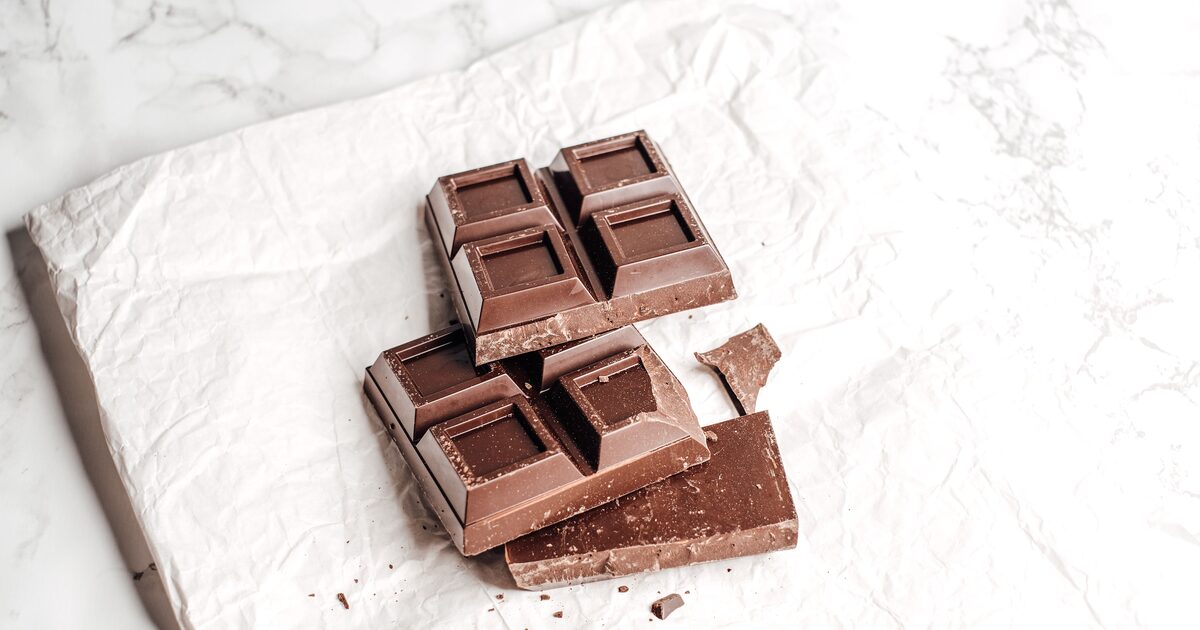
Soy lecithin is most familiar from chocolate, where it lets cocoa butter and cocoa solids flow smoothly. Our guide to chocolate and its ingredients puts lecithin alongside the other things worth checking on a bar, and in practice the lecithin line is usually the reassuring one there, while the emulsifier and any milk-derived ingredient carry more of the question. A synthetic dye like Red 40, often on the same candy-aisle labels, sits at the opposite end of the sourcing question: nothing to trace back to an animal at all, just a facility-cleanliness check instead. Recognising which lines on a panel are the easy ones is as useful as spotting the hard ones, and it keeps a scan from turning every additive into a worry.
The quick read at the shelf
If the label says soy lecithin or sunflower lecithin, it names a plant source. That is a manufacturer’s statement rather than an audited certification, but it narrows the ingredient to a plant origin that meets a plant-origin requirement, so there is usually little further to resolve on that line. If it says only “lecithin (E322)” with no source, treat it as open rather than decided, and let a certification mark or the manufacturer close it. A halal certification mark from a body you follow settles both the source and any processing question at once, which is the general order for reading a packaged food.
Zabihah reads the printed ingredient list and gives AI-assisted general guidance from it, so a named soy lecithin comes back as the straightforward line it usually is, while a bare “lecithin” is flagged as open with the reason. It is not a fatwa and not a substitute for certification, and it reads labels rather than inspecting a processing plant. For anything that matters to you, an official certification and your own scholar or certifying body remain the deciding voice.