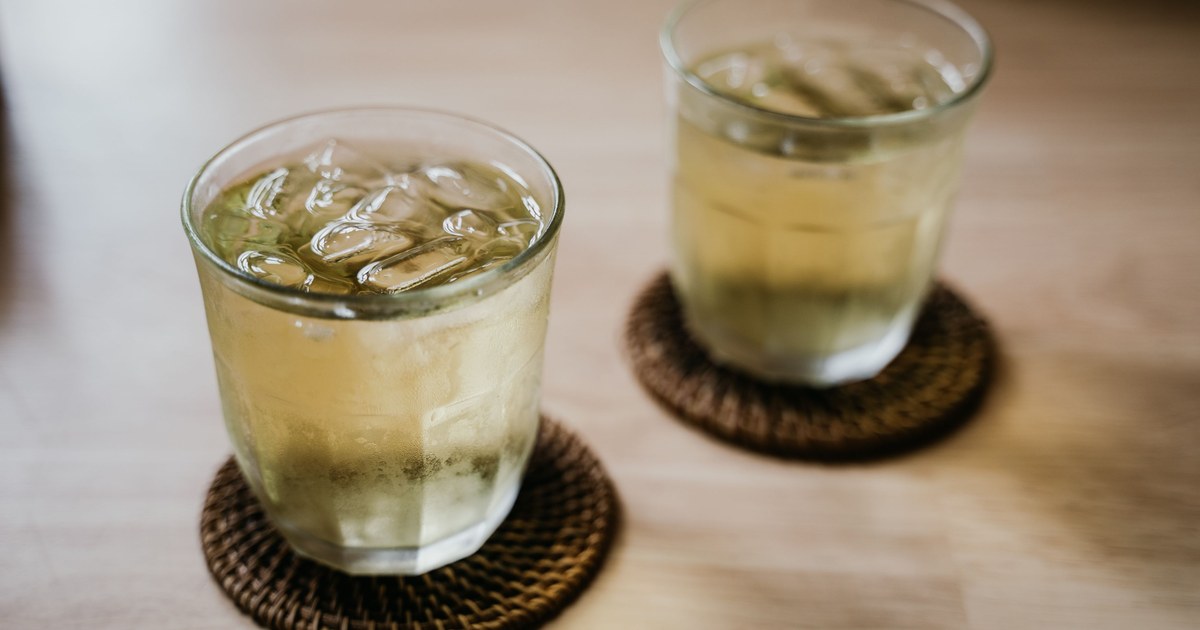
Kombucha has moved from health-food shops to the ordinary chiller cabinet, next to the juice and the sparkling water, and it is easy to pick up without a second thought. Then someone reads the word “fermented” on the label, remembers that fermentation is how alcohol is made, and puts it back. The hesitation is reasonable, and it is one several named bodies have addressed directly, though their answers apply to only one of the two products sold under the name.
The question “is kombucha halal” is really about trace alcohol. Ordinary kombucha contains a small amount of alcohol produced naturally by fermentation, and named bodies including Indonesia’s MUI and Islam Question & Answer treat non-intoxicating traces in a fermented drink as permissible. Hard kombucha is deliberately alcoholic and is a different product.
The useful work is in keeping those two apart, and in not confusing a government tax threshold with a religious one.
How kombucha ends up with alcohol in it
The US Alcohol and Tobacco Tax and Trade Bureau, TTB, describes kombucha as a fermented beverage made from steeped tea and sugar, combined with a culture of yeast strains and bacteria. LPPOM MUI, the halal assessment institute of the Indonesian Council of Ulama, describes the same culture in more detail as a symbiotic colony of acetic acid bacteria, lactic acid bacteria and yeast, often called a SCOBY.
The yeast converts sugar into alcohol. The bacteria then convert much of that into acids, which is where the sour, vinegar-like taste comes from. The process does not run to zero, so a small amount of alcohol remains in most ordinary kombucha. LPPOM MUI states that the average alcohol content of kombucha is less than 0.5%.
This is the same family of question as vinegar and soy sauce: a food where alcohol appears as a step in a natural process rather than as an ingredient someone poured in.
The 0.5% line is a tax rule
The number most people meet first is 0.5%, and it comes from US federal law, not from any religious body. TTB states that if the alcohol content of kombucha is 0.5% or more by volume at any time during production, when bottled, or at any time after bottling, the kombucha is an alcohol beverage and is subject to TTB regulation. Its general requirements add that this applies even to kombucha bottled below 0.5% if continued fermentation in the bottle takes it to 0.5% or more afterwards.
That is a rule about tax, labelling and who is allowed to sell the product. It tells you which kombucha the US government treats as an alcoholic drink. It does not tell you what any scholar or certifier holds, even where a halal body happens to use the same number.
The bottle-fermentation point matters for shoppers too. Kombucha is a living product, and a bottle left warm can keep fermenting. A drink sold under the line is not guaranteed to stay there if it is stored badly.
What named bodies say about the trace
The positions below are reported as their holders publish them.
MUI, the Indonesian Council of Ulama. LPPOM MUI cites MUI Fatwa No. 10 of 2018 on food and beverage products containing alcohol or ethanol, which states that fermented beverage products containing less than 0.5% alcohol are halal as long as the process does not use haram ingredients and the product is medically harmless. That is an explicit percentage in a named fatwa.
Islam Question & Answer. Its answer on kombucha reaches a similar conclusion by a different route. It holds that the amount of alcohol in kombucha is very low and does not lead to drunkenness, and so drinking it is not haram on that account. The test here is intoxication, not a fixed number.
MUIS, Singapore’s Islamic Religious Council. MUIS’s fatwa on ethanol addresses a neighbouring question, ethanol used as a solvent in food flavouring, finding that the content in flavourings is below 0.5%, not at an intoxicating level, and not produced from khamr, and so not considered impure. It is not a ruling on kombucha, and its permission is narrow: it applies only to ethanol used for flavouring, with the ethanol in the end product not to exceed 0.1%. What it shares with the positions above is the kind of question it asks, about source and intoxicating level rather than the mere presence of a molecule.
It is worth being clear that the reasoning is not identical everywhere, and it depends on how the alcohol got there. Islam Question & Answer’s broader answer on alcohol in food draws a distinction: where alcohol has been fully absorbed and has disappeared into a food, there is nothing wrong with it, but where its essence remains or traces can be detected, it holds the food or drink haram. That answer concerns alcohol mixed into food and drink. Some readers and scholars will apply that stricter test more widely, and if your own scholar does, that is the position to follow. Our post on halal, haram and mushbooh covers how to treat a case where you are genuinely unsure.
MUI’s other checkpoints
The alcohol is the question everyone asks, but LPPOM MUI does not stop there, and its list is a useful reminder of why certification exists. It names further critical points in kombucha production: the growth media for the bacteria and yeast, where the nitrogen source may come from meat extract or peptone that has to be traced to a halal source; the sugar, which may be processed with activated charcoal from animal bone or with ion-exchange resins that also need checking; and flavourings added afterwards.
None of those appear on a bottle. A shopper can read “tea, sugar, culture, fruit juice” and still not know what fed the culture or refined the sugar. That is exactly the kind of question an audit answers and a label does not.
Hard kombucha is a different drink
Some brands sell “hard kombucha”, fermented further on purpose to produce an alcoholic drink. Under TTB’s rule, any kombucha at 0.5% or more alcohol by volume is an alcohol beverage, and hard kombucha is made and sold as one.
The positions above on non-intoxicating traces in ordinary kombucha do not extend to it. A drink made to be alcoholic is not a trace-alcohol question at all, which is why it is worth checking the label for an alcohol-by-volume figure and the word “hard” before anything else. The two can sit close together in a chiller cabinet, and the bottles can look alike.
The quick read at the shelf
Check that the bottle is ordinary kombucha, not hard kombucha, and look for any stated alcohol content. Keep it cold, since warm storage can let fermentation continue. Read the flavourings line the way you would on any drink, since that is where a solvent can sit, as our guide to vanilla extract and alcohol explains. If a certification mark from a body you follow appears, it covers the culture media and sugar processing that no label shows.
Zabihah reads the printed ingredient list and gives AI-assisted general guidance from it, so it can flag a stated alcohol content or a flavouring line worth a closer look. It is not a fatwa and not a substitute for certification, and it cannot measure the alcohol in a bottle, test what fed the culture, or inspect a brewery. For the final decision, an official halal certification and your own scholar or certifying body remain the deciding voices.