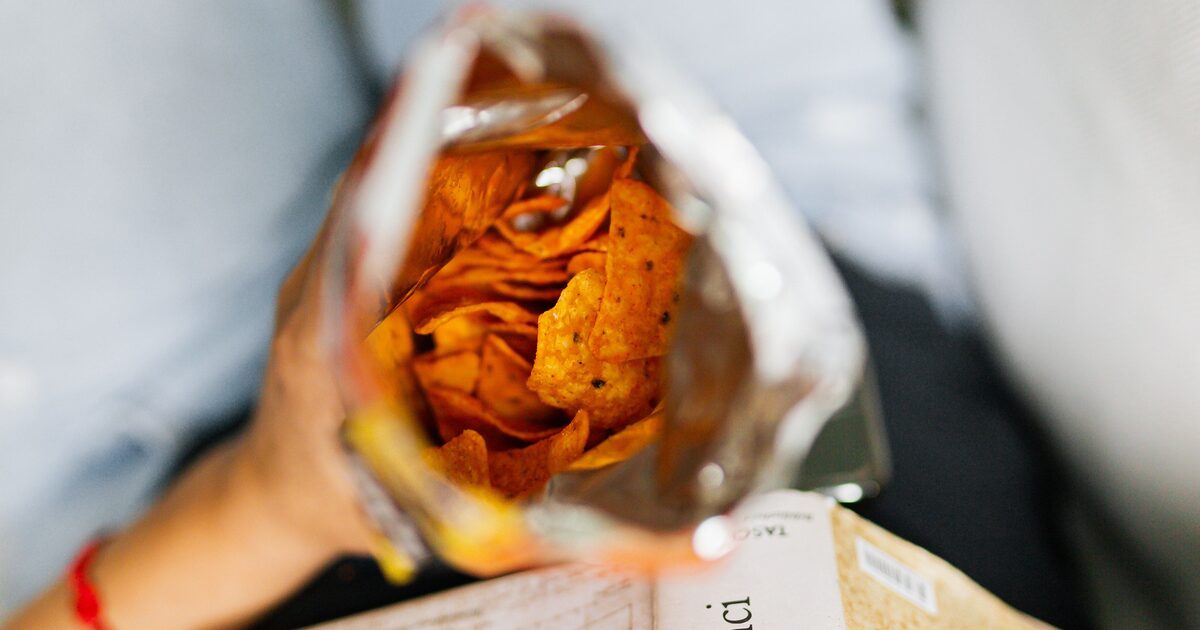
Ask what are natural flavors in food and most answers treat the phrase as a clean-eating puzzle, something vaguely industrial to be avoided. For a shopper checking halal status the question is narrower and much more answerable, because the United States has written the definition down, and the regulation is broader than the words “natural flavor” suggest.
US food law defines “natural flavor” at 21 CFR 101.22(a)(3) as flavouring matter derived from a spice, fruit, vegetable, edible yeast, herb, bark, bud, root or leaf, or from meat, seafood, poultry, eggs or dairy products, or from fermentation products of any of those. The same regulation lets a manufacturer declare all of it as simply “natural flavor”, without naming which source was used.
What are natural flavors in food, in the regulation’s own words
The definition sits in the Food and Drug Administration’s labelling rules for spices, flavourings, colourings and chemical preservatives. It describes natural flavour as the essential oil, oleoresin, essence or extractive, protein hydrolysate, distillate, or any product of roasting, heating or enzymolysis that contains flavouring constituents derived from a listed source, and whose significant function in food is flavouring rather than nutrition.
Two things in that sentence matter for a halal check. The first is the source list. Plant material is there, as everyone assumes, but so are meat, seafood, poultry, eggs and dairy products, explicitly and by name. A “natural flavor” is not a synonym for a plant extract. It is a functional category defined by what the substance does in the food, not by what kingdom it came from.
The second is the word “natural” itself. In this regulation it is a contrast with “artificial flavor”, which the same section defines as flavouring matter that is not derived from those natural sources. “Natural” here means “came from something that was once alive or grown”, which is precisely the property that makes the halal question live rather than settled.
The label usually does not have to name the source
This is the part that general-audience articles skip. Paragraph (h)(1) of the same regulation sets out how a flavour must be declared in the ingredients statement, and it permits spice, natural flavour and artificial flavour to be declared as “spice”, “natural flavor” or “artificial flavor”, or any combination of those, as the case may be. There is no requirement to add the origin.
The regulation does carve out a few exceptions where a more specific name is mandatory. Substances made by cutting, grinding, drying or pulping tissues from fruit, vegetables, meat, fish or poultry, such as onion powder or celery powder, are treated as food rather than flavour and must be declared by their common name. Protein hydrolysates used for their flavour effect may not be declared simply as “flavor” or “natural flavor” either, and have to carry their specific common name. Those exceptions are narrow. For the ordinary case, “natural flavor” on its own is a complete and lawful declaration.
So when a packet lists natural flavour and nothing else, the shopper has not missed a clue. The information genuinely is not on the packet, by design and with the regulator’s permission.
Why this lands in the doubtful bucket
A label that permits both a citrus extract and a dairy or meat derivative under one phrase cannot, on its own, settle anything. That is exactly the situation the mushbooh category exists to describe: not a verdict that something is forbidden, but an honest statement that what is printed on the packet is insufficient to decide.
It puts natural flavour in the same structural position as whey and other dairy and enzyme derivatives, where the ingredient name identifies a class of substance rather than a specific origin. Glycerin is the same shape of problem in a different aisle: one name, more than one possible source, nothing on the pack to tell them apart. The important consequence is that the answer is not fixed across brands. Two products can both say “natural flavor” and have entirely different flavour houses, different source materials and different answers behind the same four letters on the pack. Any article that tells you natural flavours are always fine, or always a problem, is answering a question the label does not ask. Not every additive shares this exact problem, either: carmine (E120) has a known, named source, and its dispute is a different one entirely, over whether that source is permissible at all.
There are only two ways to close that gap, and both go outside the packet. One is to write to the manufacturer and ask what the flavour is derived from, which many will answer in general terms even when they will not disclose a proprietary formulation. The other is to buy a product carrying a halal certifier’s mark, which means an organisation has already put that question to the supplier and audited the answer. IFANCA, the Islamic Food and Nutrition Council of America, makes the same point about enzymes in cheese: because most products do not list the source, the practical advice is to ask the producer or rely on certification rather than infer from the ingredients panel.
The European and UK picture is different, but not solved
The European Union governs flavourings under Regulation (EC) No 1334/2008, which the European Commission describes as setting general requirements for the safe use of flavourings, definitions for the different types, and specific conditions on using the word “natural”.
Article 16 of that regulation is where the naming rules live. The term “natural” may only be used for a flavouring whose flavouring component consists solely of flavouring preparations and natural flavouring substances. If the label names a source, for example “natural strawberry flavouring”, at least 95 per cent by weight of the flavouring component must have come from that named source. And the bare term “natural flavouring” is reserved for flavourings derived from several different source materials where naming them would not reflect the actual flavour.
That is a stricter regime than the US one about what the word “natural” can be attached to, and it makes a named source on an EU or UK label genuinely informative. It does not, however, force disclosure in the other direction. An unqualified “natural flavouring” on a European pack still tells you the component came from more than one source material, not which ones. The regulation was retained in UK law after the implementation period ended, so British labels follow the same naming logic.
The practical upshot for a shopper is small but real: a European label that names a plant source is telling you something enforceable, while an unnamed “natural flavouring” leaves you in the same place a US label does.
What to do with it at the shelf
Treat the phrase as a flag for a follow-up, not as a verdict in either direction. If the product carries a halal certification mark, the flavour has already been through someone’s audit and the mark is the stronger signal. If it does not, the ordinary label-reading sequence still applies: rule out the unambiguous items first, then note which ingredients are source-dependent, then decide whether this is a product worth an email to the manufacturer or one to simply pass over in favour of a certified alternative.
Zabihah reads the ingredients panel and gives AI-assisted general guidance on what each item is and where it can come from, which is why an unqualified “natural flavor” comes back as doubtful with the reason attached rather than as a confident yes or no. That guidance is not a fatwa and it is not a substitute for certification. For anything that matters to you, an official halal certification and the ruling of a scholar or certifying body you trust remain the final word.