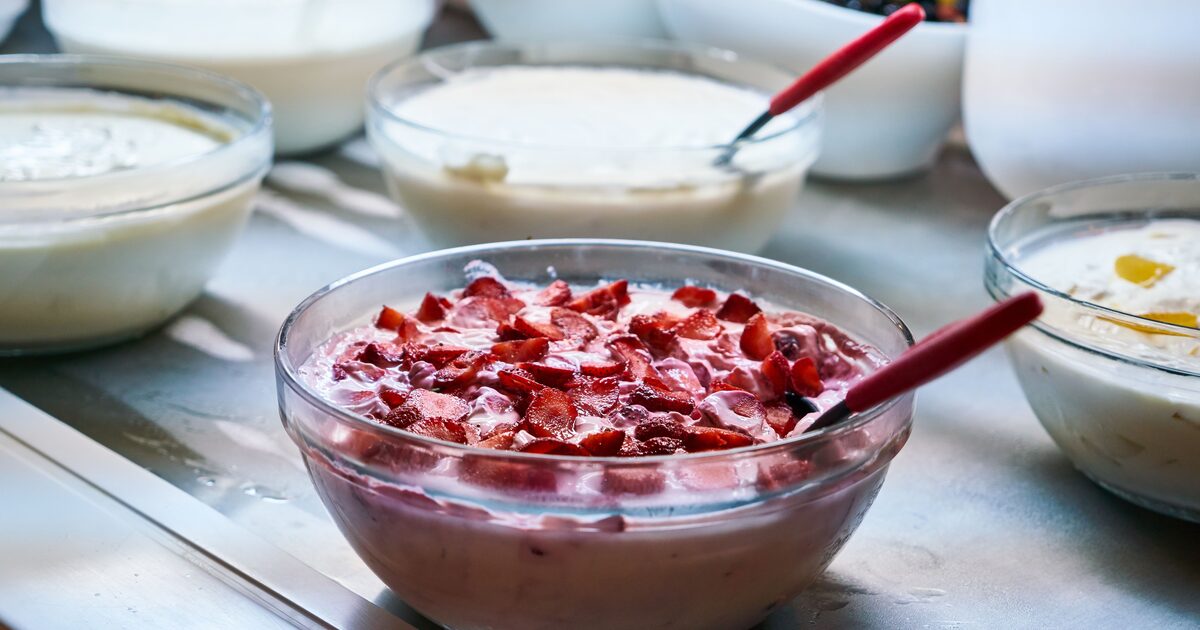
Yogurt feels like it should never need a second thought, and often it does not. Wikipedia’s entry describes yogurt as a food produced by the bacterial fermentation of milk, using cultures that turn milk sugar into lactic acid and set the milk. Milk and live cultures raise no question in themselves. So “is yogurt halal” splits quickly by product type: plain, set and flavoured pots are genuinely different questions, and only some of them have anything to investigate.
The short version is that plain yogurt is usually just milk and cultures, with nothing to resolve, while set, low-fat and flavoured pots sometimes add gelatine, thickeners or flavourings that are source-dependent. The certifiers and scholars below read those add-ins, not the yogurt itself, and where a source is unstated they treat it as doubtful and point to certification.
What sets a yogurt, and why it is not the cheese question
It is worth clearing up one thing at the start, because it saves confusion. Yogurt is set by bacterial cultures fermenting the milk, not by rennet. Rennet is the enzyme that curdles milk into cheese, and it carries a genuine scholarly disagreement over animal rennet between the Sunni schools. Standard yogurt does not use it, so that particular dispute does not usually apply to a pot of yogurt. The live cultures themselves, the bacterial strains that ferment the milk, are not an animal-slaughter question.
That leaves the extras. Where a plain yogurt is milk plus cultures, there is nothing on the panel to resolve, and it sits firmly outside the doubtful category. The question only begins when a pot adds something to change texture, shelf life or flavour.
The add-ins worth checking
The main one is gelatine. Some set-style, low-fat and children’s yogurts use gelatine to firm the texture that fat would otherwise provide. Gelatine is the same ingredient behind the marshmallow question, and Wikipedia’s entry on it notes that most gelatine is derived from pork skins, pork and cattle bones, or split cattle hides, with fish gelatine as a separate case. The American Halal Foundation reads gelatine source by source: bovine gelatine is acceptable where the animal was permissible and Islamically slaughtered, porcine is not, and fish gelatine is generally accepted. A pot that lists an unqualified “gelatine” has raised a question it has not answered.
The second is the thickener or stabiliser. Many yogurts thicken instead with plant-based agents such as pectin, from fruit, or modified starch, or with strained protein in the case of Greek-style yogurt, none of which raise an animal-origin question. Recognising a plant thickener on the panel is often what moves a pot out of doubt.
The third is flavouring. Fruit and dessert yogurts carry flavourings, and IFANCA, the Islamic Food and Nutrition Council of America, lists natural and artificial flavourings in the “Investigate Further” column of its ingredient guide, because a flavour’s own subcomponents can trace back to animal or alcohol sources. Colours in some fruit pots are a fourth, smaller watchpoint.
Drinkable yogurts, children’s pots and probiotic drinks
The same logic covers the products aimed at children and at the on-the-go market, which is where parents ask the question most. Drinkable yogurts and probiotic shots are still fermented milk at their base, so the cultures are not the issue. What varies is again the add-ins: some use gelatine or thickeners for body, most carry added flavourings and colours, and a few are fortified with vitamins whose own carriers can be worth checking. Children’s yogurt pots, tubes and fromage frais follow the same pattern, often with brighter colours and sweeter flavours that mean more flavouring lines to read, not a different kind of question. Recognising that a squeezy tube and a plain pot raise the identical short checklist keeps a weekly shop from turning into a research task.
Why two fruit yogurts can differ
Because gelatine, thickeners and flavours are all source-dependent, two similar-looking fruit yogurts can reach different conclusions. One might set with pectin and use a certified flavour; another might use gelatine of unstated origin. The panels look alike, but the sourcing does not, which is why a shelf-wide “yogurt is halal” statement is not something the labels support. A certification mark from a body you follow resolves all of these at once, because it means the gelatine, thickener and flavour sources have been checked rather than assumed.
The quick read at the chiller
Plain, unsweetened yogurt with only milk and cultures has little to question. For set, low-fat or flavoured pots, find the texture ingredient: pectin, starch or strained protein means no animal-origin question, while an unqualified “gelatine” means the pot has not told you the source. Then note the flavouring. A certification mark settles the lot. The same reading order for any packaged food applies, just with fewer lines to scan than most products.
Zabihah reads the printed ingredient list and gives AI-assisted general guidance from it, flagging gelatine or an unspecified flavour as doubtful with the reason, rather than guessing. It is not a fatwa and not a substitute for certification, and it reads labels rather than verifying slaughter or what else ran on the line. For anything that matters to you, an official certification and your own scholar or certifying body remain the deciding voice.