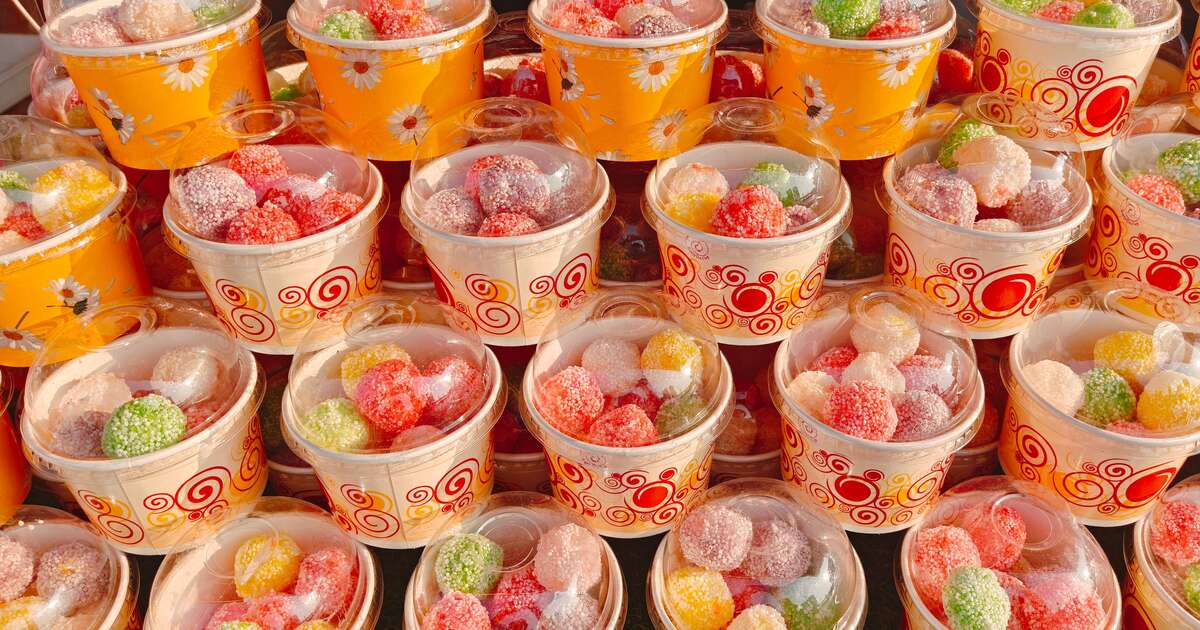
A boxed gelatin dessert is one of the simplest things in the cupboard and one of the quickest questions a parent gets asked before pudding. Jelly in the UK, Jell-O in the US: it is sugar, flavour, colour and one structural ingredient that does all the work. That single ingredient is where the whole question sits.
The honest answer to “is Jell-O halal” is that a standard gelatin dessert rests entirely on gelatine, and gelatine can come from cattle, from pigs or from fish, with the box almost never naming which. So the certifiers and scholars below do not read the dessert; they read the source of its gelatine, and where that is unstated they treat it as doubtful and point you to certification.
What a gelatin dessert is made of
Wikipedia’s entry on Jell-O describes the product as a gelatin dessert, and its entry on gelatin defines gelatine as a protein produced from collagen extracted from animal bones, connective tissue and other animal parts. Everything else in the box, the sugar, the flavouring and the colour, is doing a supporting job. Strip those away and the question is only about the setting agent.
Wikipedia’s gelatin entry adds the detail that matters: most gelatine is derived from pork skins, pork and cattle bones, or split cattle hides, and gelatine made from fish by-products avoids some of the religious objections to gelatine consumption. So the same word on the box can describe materials from very different animals, which is exactly why the word alone cannot answer the question. This is the textbook mushbooh situation: undecided on the evidence printed in front of you, not forbidden and not established.
How named bodies read gelatine
Named organisations handle gelatine differently, and knowing that they differ is more useful than any single verdict. IFANCA, the Islamic Food and Nutrition Council of America, lists gelatin in the “Haram / Avoid” column of its Halal Shopper’s Guide to Ingredients, a deliberately cautious consumer shortcut that treats an unqualified gelatine as one to skip.
The American Halal Foundation sets out a source-by-source position instead. In its guidance on whether gelatin is halal, it treats bovine gelatine as acceptable where the animal was permissible to eat and slaughtered according to Islamic law, porcine gelatine as not acceptable, and fish gelatine as generally accepted, with plant-based gelling agents unrestricted by default. There is also a longstanding scholarly argument in the background about istihalah, whether the chemical processing transforms the material enough to change its status. Islam Question & Answer, supervised by Shaykh Muhammad Salih al-Munajjid, reports that debate and records that the Islamic Fiqh Council in Jeddah nonetheless held gelatine from pig sources impermissible, particularly given that alternatives from Islamically slaughtered animals are available. These are the positions as their holders state them, reported here rather than ruled on. The same tension, and the same named sources, sit behind marshmallows, which turn on the identical ingredient.
What “beef gelatine” on the box does and does not settle
Some jelly and dessert boxes now say “beef gelatine” rather than just “gelatine”, and that is a real improvement. It settles the species and rules out the pork question, which is the one most parents are actually asking about.
What it does not settle is how the animal was slaughtered. Every position above that accepts bovine gelatine attaches the slaughter condition to it, and a box that says “beef gelatine” has answered the species and left the slaughter unstated. A box that says “halal beef gelatine” without naming a certifier is a manufacturer’s claim rather than an audited one. This is a limit no label-reading tool can cross: reading ingredients tells you what something is, not how an animal was slaughtered or what else ran on the line. Only a certification body that has audited the supply chain can speak to that, which is why a certifier’s mark is worth more than any careful reading of the back of the box.
The routes that avoid the question entirely
There are two clean ways past all of this, and both are easy to spot in a supermarket. The first is a halal certification mark on the box, which means a body has checked the gelatine’s sourcing rather than a manufacturer asserting it. The second is a gelatine-free dessert. A large share of jelly-style products now set with plant-based gelling agents instead: agar, from seaweed, and carrageenan, also from seaweed, both appear in confectionery and desserts as setting agents, and pectin, from fruit, does the same job in some. A dessert set with agar or carrageenan removes the animal-origin question that gelatine creates. Some famous candies have made the same switch for their own reasons; see are Skittles halal for a case where gelatine already left the recipe and the open questions moved elsewhere. It does not by itself settle the flavourings or colours on the panel, or what else ran through the same factory, so the rest of the reading order for any packaged food still applies.
The short version at the shelf
Look first for a halal certification mark from a body you follow, and check it is current and covers this product. If it is there, the sourcing work has been done by people who can see the supplier records. If it is not, find the setting agent. Agar, carrageenan or pectin means no animal-origin question. An unqualified “gelatine” means the box has not told you enough, and “beef gelatine” without a certifier means it has told you the species and not the slaughter.
Zabihah reads the printed ingredient list and gives AI-assisted general guidance from it, flagging gelatine as doubtful when the source is unstated and telling you why, rather than guessing a yes or no. It is not a fatwa, it does not replace certification, and it cannot verify slaughter or cross-contamination. None of this is a reason for guilt about anything already eaten. For a dessert that goes into the week regularly, an official certification and the gelatine ingredient page, read alongside your own scholar or certifying body, are the final word.