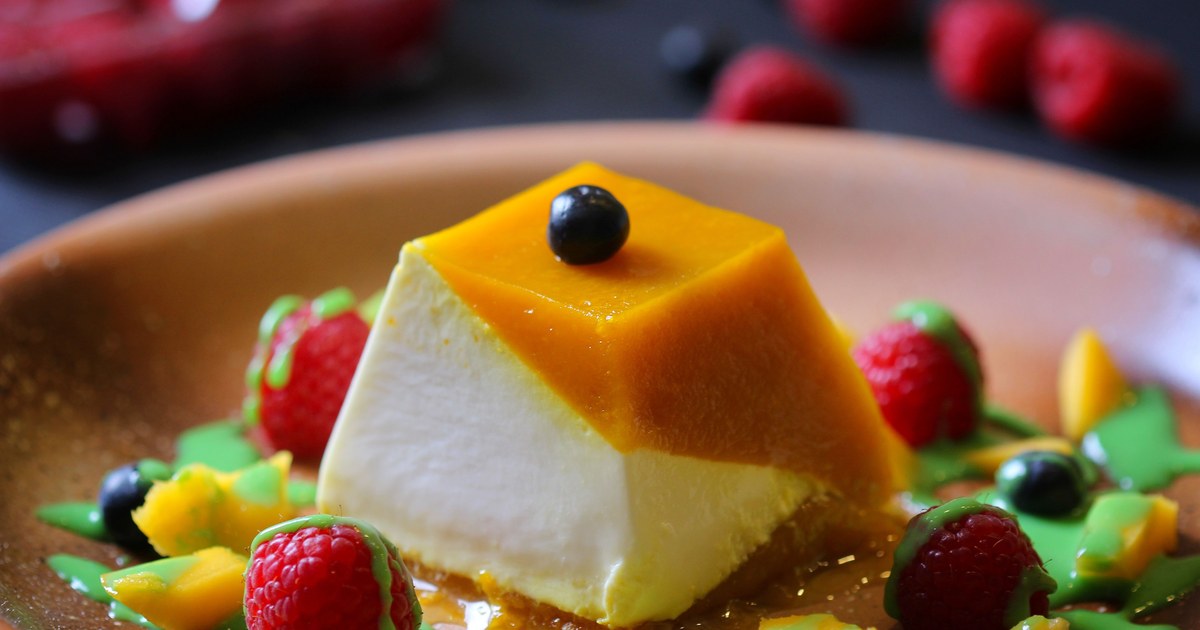
Most people arrive at gelatin from the other direction. They read a label on a packet of sweets, find the word gelatin, and wonder whether it is a problem. This piece is for the reader a step further on: someone making panna cotta, marshmallows, a cheesecake or a jelly at home, who wants to buy gelatin that is halal and use it without the recipe failing.
The American Halal Foundation describes halal gelatin as gelatin from a permissible source: halal-slaughtered cattle, or fish, which it says most scholars accept. On a pack, that means reading two things: the named source (bovine or fish, not just “gelatin”) and a certifier you trust. Swapping source changes how a recipe sets.
The first half of this guide is about buying it. The second is about what happens in the bowl.
Why the word “gelatin” on its own tells you nothing
Gelatin is made from collagen, and the collagen has to come from somewhere. Wikipedia’s entry describes gelatin as produced by partial hydrolysis of collagen extracted from the skin, bones and connective tissue of animals such as cattle, chickens, pigs and fish.
In Europe, the proportions are published. Gelatine Manufacturers of Europe states that approximately 80 per cent of the edible gelatine produced in Europe is made from pork skins, 15 per cent from cattle hide split, and the remaining 5 per cent from pig and cattle bones and fish. That is a European production figure, not a global one, but it makes the default clear: gelatin with no source named is more likely to be pork than anything else in that market.
US meat labelling rules point the same way. Under 9 CFR 317.8, the term “gelatin” as used on labels of meat products means the jelly prepared by cooking pork skins, tendons or connective tissue, or dry commercial gelatin. On a meat product label, then, the bare word is not neutral, and it is a useful reminder of what the default has historically been.
This is why our reference page on whether gelatin is halal treats unspecified gelatin as doubtful (mushbooh), and why every packet-of-sweets question on this site, from marshmallows to boxed jelly desserts, ends at the same place: the source.
What named bodies accept
The American Halal Foundation sets out its position source by source. Porcine gelatin is strictly haram and, in AHF’s words, cannot be considered halal “regardless of any purification processes”. Bovine gelatin is acceptable where the animal was permissible and slaughtered according to Islamic law. Fish gelatin, AHF says, is widely regarded as halal by most Islamic scholars, since fish are generally permissible and do not require specific halal slaughter.
There is a genuine disagreement here worth knowing about, so that you recognise it when you meet it. Islam Question & Answer records a scholarly debate over istihalah, whether processing transforms the source material completely enough to change its ruling, noting that some hold the transformation in gelatin is complete and others that it is not. It records that the Islamic Organization for Medical Science adopted the transformation view. On the other side, it records that the view that pork-derived gelatin is haram is held by many contemporary scholars, and reports the Islamic Fiqh Council’s position that it is impermissible, particularly since alternatives from halal sources are available. AHF’s “regardless of any purification processes” states that second position plainly. If your own scholar holds the transformation view, that is a position with named support behind it; the certifiers quoted in this guide work to the other one.
What to look for on the pack
A gelatin product intended for halal buyers usually does two things that ordinary gelatin does not.
It names the species. Look for “beef gelatin”, “bovine gelatin” or “fish gelatin” in the product name or ingredient line. A bovine source alone is not enough, since cattle can be slaughtered in ways that do not meet a halal standard, which is why the second thing matters.
It carries a certifier. A certification mark from a named body means someone has checked the slaughter and the supply chain behind the collagen, which no amount of label reading can do. AHF’s own guidance recommends looking for certification from a recognised authority on the product label. Our overview of halal certification marks covers how to look a mark up rather than take it on trust.
There is also now an international standard specifically for this product. The Standards and Metrology Institute for Islamic Countries, SMIIC, published OIC/SMIIC 22:2021, Halal Edible Gelatine, Requirements and Test Methods, which it describes as setting out the Islamic rules and technical requirements for producing halal and safe edible gelatine. You will not usually see the standard’s number on a supermarket pack, but it is part of what a certifier may audit against, and it is a useful term to know if you are buying in bulk or from a specialist supplier.
Swapping sources in a recipe
This is where many home cooks get caught out. Changing from ordinary gelatin to a halal alternative is a change of ingredient, not just of label, and the set can change with it.
Bovine halal gelatin is the closest like-for-like swap. Gelatin is sold at different gel strengths, measured in grams Bloom, and Wikipedia notes commercial gelatin ranges from around 90 to 300 Bloom. Leaf and powder, and different brands, may not be interchangeable gram for gram, so follow the quantity the maker gives for setting a stated volume of liquid, and compare that with what your recipe assumes.
Fish gelatin sets more gently. Wikipedia notes that gelatin derived from fish has a lower melting and gelation point than gelatin from beef or pork, and AHF likewise notes that fish gelatin may have slightly different gelling strengths and melting points that can affect texture. In practice that points to a softer set that is less forgiving on a warm table.
Agar-agar is not gelatin at all but a seaweed-derived gel, and it behaves very differently. Wikipedia describes agar as setting below roughly 32 to 42 °C and not melting again until above about 85 °C. That is almost the reverse of gelatin, which melts below body temperature. An agar jelly holds its shape in a warm room and gives a firmer, cleaner bite, but it will not melt in the mouth the way a gelatin panna cotta does. For desserts where the gel does not need to melt on the tongue, it works well.
Pectin is the other common plant option, best suited to jams, fruit set and some gummy recipes, and our post on pectin covers why it avoids the gelatin question entirely.
The quick read when you buy
Look for the species on the pack, not just the word gelatin. Look for a certifier you follow. If you swap from ordinary to fish gelatin or to agar, expect the set to change and adjust the method rather than the expectation. And if a recipe or a packet of sweets simply says “gelatin”, treat it as a question to verify, not an answer.
Zabihah reads printed ingredient lists and gives AI-assisted general guidance from them, so it will flag a bare “gelatin” line on a packet and tell you when a source is named. It is not a fatwa and not a substitute for certification, and it cannot trace which animal a batch of collagen came from or how it was slaughtered. For the final decision, an official halal certification and your own scholar or certifying body remain the deciding voices.
Sources
- American Halal Foundation: Is Gelatin Halal?
- Islam Question & Answer: Is Gelatin Halal?
- SMIIC: OIC/SMIIC 22:2021 Halal Edible Gelatine, Requirements and Test Methods
- Gelatine Manufacturers of Europe: Manufacturing
- 9 CFR 317.8, Prohibited use of terms (Cornell LII)
- Gelatin (Wikipedia)
- Agar (Wikipedia)