Somewhere between the flour and the salt on a bread packet, a cheese wrapper or a fruit juice carton, you find one bare word: enzymes. No source, no E-number, no qualifier. The question are enzymes halal runs straight into that blank, and most pages answering it skip the part that actually explains the blank.
Enzymes are proteins that speed up a reaction, and they are used across food manufacturing to curdle milk, condition dough, clarify juice and develop flavour. They come from three kinds of origin: micro-organisms, plants, and animals. The label is usually silent about which, because in both EU and US law an enzyme that acts during processing and has no function in the finished food is treated as a processing aid rather than an ingredient, and processing aids do not have to be declared.
Why the word appears with nothing after it
Start with what an enzyme legally is. The EU’s Regulation (EC) No 1332/2008 defines a food enzyme, in Article 3(2)(a), as a product obtained from plants, animals or micro-organisms and added to food for a technological purpose at any stage of manufacture, processing, preparation, treatment, packaging, transport or storage. That definition names all three origins in the same breath and treats them as one category. Nothing in the word “enzymes” on a packet distinguishes them.
The labelling side is governed separately. Article 20 of Regulation (EU) No 1169/2011, the EU’s food information to consumers rules, sets out which constituents may be left out of the list of ingredients, and it includes food additives and food enzymes which are used as processing aids. The European Commission’s own guidance page on food enzymes confirms the practical effect: whether an enzyme counts as an ingredient or as a processing aid decides whether it has to appear in the ingredient list at all.
The United States arrives at the same place by a different route. 21 CFR 101.100(a)(3) exempts incidental additives that are present at insignificant levels and have no technical or functional effect in the finished food, and it spells out processing aids as substances that are removed before packaging, that are converted into constituents normally present in the food, or that survive only at insignificant levels with no functional effect. Note that the exemption turns on both limbs together, insignificant level and no functional effect in the finished food, so heat denaturing on its own does not settle it.
So the pattern is consistent across both jurisdictions. Where an enzyme is a processing aid, it may not be declared at all, and where it is declared, the law that requires the word does not require the origin. The blank on the packet is not a manufacturer being evasive. It is the labelling rules working as written.
One important exception cuts the other way. Article 20 opens “without prejudice to Article 21”, the allergen provision, so a processing aid derived from a listed allergen still has to be flagged. That is a food-safety carve-out rather than a source-disclosure one, but it is the reason you will occasionally see an origin named where you did not expect it.
The three possible origins
Microbial. Enzymes produced by bacteria, yeasts or moulds grown in fermentation. Rennet is the clearest illustration of how far this has gone: Wikipedia’s account reports fermentation-produced chymosin at roughly 90 percent of the global rennet market as of 2017.
Plant. Enzymes extracted from plants, for example papain from papaya or bromelain from pineapple, used for tenderising and clarifying.
Animal. Enzymes extracted from animal tissue. Rennet from calf stomach lining is the familiar one, and animal lipases are used in some ripened cheeses. This is the category that carries the slaughter question.
Only the third raises anything beyond an ordinary ingredient check, and there is no way to tell from the word alone which of the three you are looking at.
What named authorities say about each
On microbial and fermentation-produced enzymes, the answer published on SeekersGuidance by Mawlana Ilyas Patel, checked and approved by Shaykh Abdul-Rahim Reasat, is that microbial enzymes made from minerals, plants or artificial sources are halal provided they are not harmful or intoxicating, and that enzymes derived from halal animals are likewise halal. IFANCA states in its own published answers that microbial enzymes are not derived from meat and are halal, and that chymosin produced using biotechnology is halal, while the enzyme derived from pigs, pepsin, is haram. The American Halal Foundation, setting out its own scheme criteria, accepts microbial enzymes derived from yeast and fungi and does not accept animal rennet, on the ground that there is no guarantee of how the animal was slaughtered. Those are two named bodies applying two published standards, and certifiers differ in their detailed requirements, so the standard that governs you is the one your certifying body publishes.
Notice what that does and does not settle. It settles the question once you know the origin. It does nothing at all when the origin is the thing you cannot see. That gap, between a clear rule and an unavailable fact, is what the word “enzymes” on a packet actually represents, and it is the definition of the mushbooh category: not forbidden, not confirmed, unresolved by the information in front of you.
Rennet is this same question wearing a different name
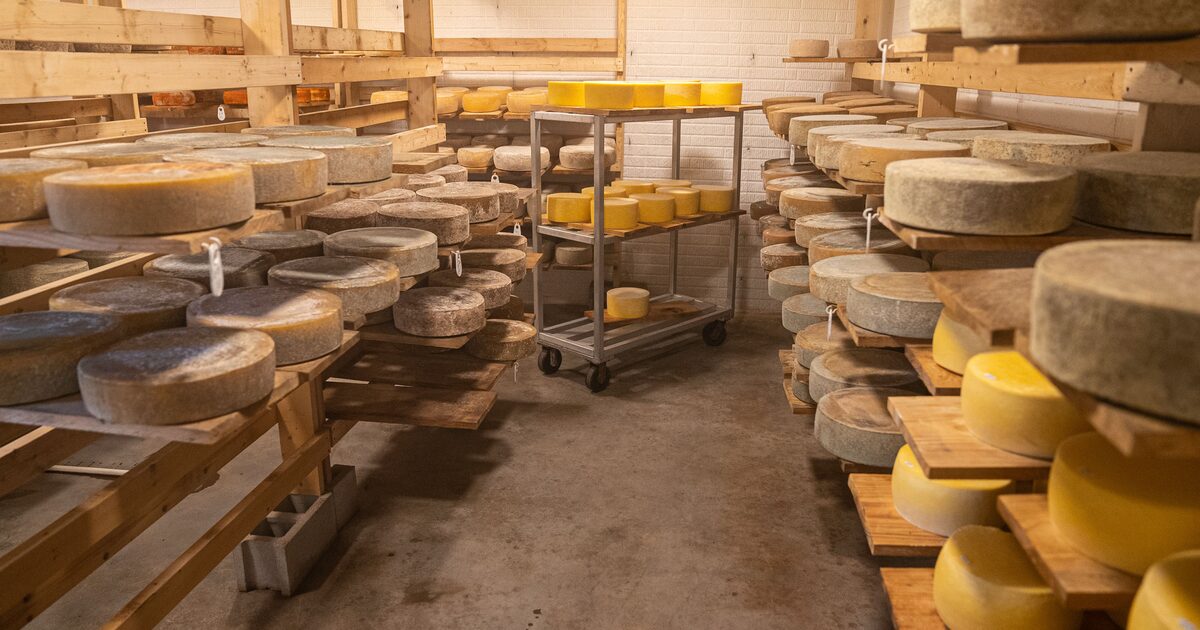
The clearest worked example is cheese. Wikipedia’s article on rennet describes four coagulant families: calf rennet extracted from the abomasum of young calves, microbial coagulants from moulds, plant coagulants such as thistle and fig, and fermentation-produced chymosin (FPC), made by micro-organisms given an inserted chymosin gene. The same source reports that FPC held around 90 percent of the global rennet market by 2017, and 80 to 90 percent of the US and UK markets, with animal rennet still used in some traditional and protected European cheeses.
A cheese label that says “enzymes” or “coagulant” is therefore very likely, but not verifiably, referring to a fermentation-produced coagulant. Likelihood is a reasonable basis for a shopping decision and a poor basis for a religious one, which is why rennet gets treated as its own question rather than folded into the general enzyme answer. The longer version of that story is in our guide to cheese and rennet, and the same reasoning runs through the whey that cheesemaking leaves behind, where a coagulant nobody names sits one step upstream of the ingredient that is named.
What to do with a bare enzyme line
Look for a certifier’s mark first. A certifier audits supplier documentation, so it can see the enzyme origin that the packet omits. If the mark is there, this question is answered upstream of you.
Without a mark, the resolution is the manufacturer. Enzyme origin is a straightforward question for a customer care team to answer from a specification sheet, and asking is faster than it sounds. Some manufacturers pre-empt it by printing “microbial enzymes”, “vegetarian rennet” or “non-animal rennet”, and a qualifier like that closes the animal-source question. It does not close every question: growth media, carriers and solvents sit outside what the qualifier speaks to, which is where a certifier’s standard still does work a label cannot.
What does not work is inference. There is no in-store test, no pattern in the E-numbers, and no reliable rule of thumb by product category. This is the same shape of problem as natural flavors, and as mono- and diglycerides, where one E-number covers plant, synthetic and animal routes at once: a legally correct label term that covers several different underlying realities. The honest handling of both is to name the uncertainty rather than resolve it by guessing.
Zabihah works exactly that way on this word. It can spot “enzymes” on a panel and tell you why the line matters, and it will flag it as mushbooh rather than pretend to know the source, because the source is not on the label for it to read. What it offers is AI-assisted general guidance from the declared ingredient list, not a fatwa and not a replacement for official halal certification. When a product matters to you, a certifier’s mark or your own scholar is the final word.
Sources
- Regulation (EC) No 1332/2008 on food enzymes (EUR-Lex)
- EU rules on food enzymes (European Commission)
- Regulation (EU) No 1169/2011, Article 20 (legislation.gov.uk)
- 21 CFR 101.100, Food labeling exemptions (GovInfo)
- IFANCA: What is the source of rennet?
- IFANCA: Isn't all cheese halal?
- American Halal Foundation: Halal Certification for Cheese and Dairy
- Rennet (Wikipedia)
- Is a Food Product Halal if it Contains Microbial Enzymes? (SeekersGuidance)