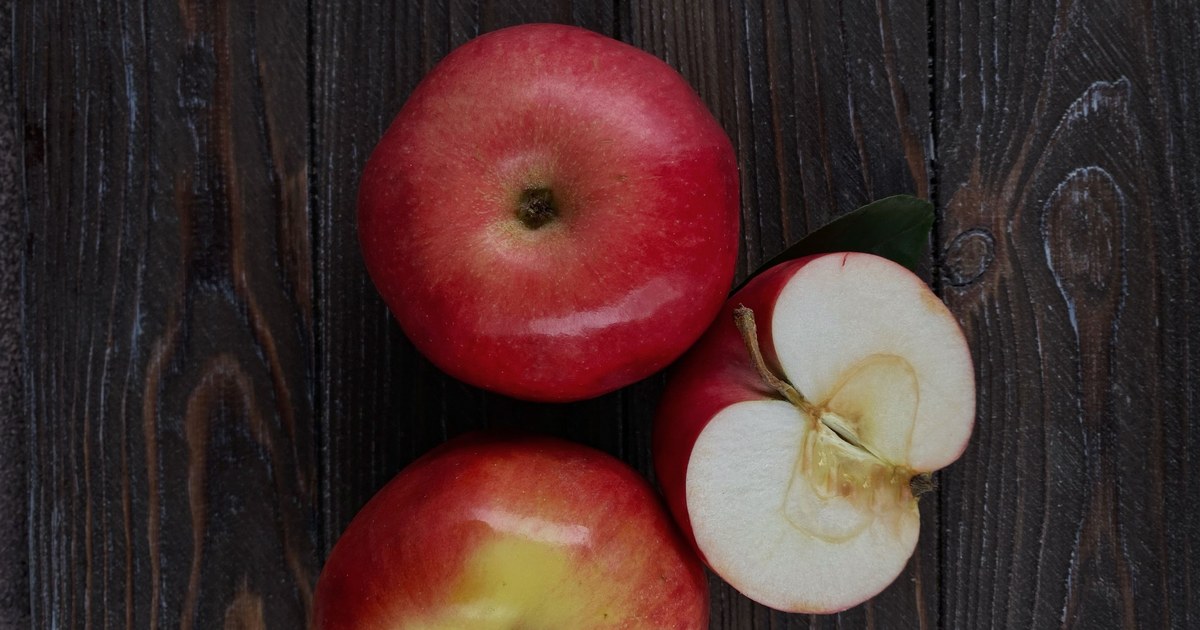
Shellac is the shine. It is the gloss on a jelly bean, the polish on a malted milk ball, the film that keeps a supermarket apple looking freshly picked, and the coating that makes a bitter tablet swallowable. On a label it may read as shellac, confectioner’s glaze, resinous glaze, or E904, and in several of its most common uses it does not appear on a label at all, because a wax applied to loose fruit is not a packaged ingredient. It is also one of the few additives where the disagreement between qualified authorities is not a matter of missing information.
The honest answer to “is shellac halal” is that named authorities reach opposite published conclusions. E904 is a resin secreted by the female lac insect, so the question is whether an insect secretion may be consumed. Islam Question & Answer permits food coated with it, while Darul Ifta Birmingham rules it impermissible. This is a real scholarly difference, not a gap in the label.
What shellac is and where it comes from
Wikipedia describes shellac as a resin secreted by the female lac bug on trees in the forests of India and Thailand. The insects feed on tree sap and excrete a substance called sticklac almost continuously, forming tunnel-like tubes along the branches, and the raw material is scraped from the bark. Wikipedia notes that between 50,000 and 300,000 lac bugs are involved per kilogram of the resin.
Its food uses are broad. Wikipedia lists it as confectioner’s glaze on sweets and pills, and as a wax coating on citrus fruit to extend shelf life. IFANCA, the Islamic Food and Nutrition Council of America, describes the same territory in its own article on insect-derived ingredients, naming malted milk balls and jelly beans as typical glazed confectionery, noting that shellac is sprayed on oranges, lemons and apples to replace wax washed off during cleaning, and explaining that pharmaceutical-grade shellac coats tablets, with the thickness of the coating controlling where and when a drug dissolves.
One further detail from Wikipedia matters for anyone reading an ingredient list closely: to apply it, shellac is dissolved in ethyl alcohol or denatured ethanol. That solvent is used during manufacture and evaporates rather than remaining as an ingredient, but it is the kind of processing detail a certifier examines and a consumer panel never mentions, in the same way the source of glycerin never appears on the label that names it.
Why this is not simply the carmine question again
Shellac and carmine get filed together because both come from scale insects, and the filing is useful up to a point. Our post on carmine and the E120 question sets out the base disagreement, which applies here too: IFANCA, quoting Sheikh Rachid Belbachir, records that the schools of Islamic jurisprudence other than the Maliki prohibit the consumption of insects, while the Maliki school permits them so long as no harm results, with the locust permitted by all schools.
The two ingredients then part company on a point of substance. Carmine is carminic acid extracted from the insect’s body. Shellac is something the insect produces and deposits on a branch, closer in kind to a resin or a wax, and that difference is what the permissive reasoning below rests on: a transformed or absorbed secretion is argued to take a different ruling than the insect’s body itself.
Set against that is a categorical objection, not a contamination one: the restrictive position (named below) does not argue that insect fragments survive processing. It holds instead that shellac is secreted by an insect at all, and that insect-produced content falls under the same prohibited category as the insect itself regardless of how it is refined. So the two sides are not disputing what ends up in a jar of processed shellac. They are disputing whether an insect’s own secretion carries the same ruling as its body, and both positions are published and reasoned.
The two positions, named
On the permissive side, Islam Question & Answer, supervised by Shaykh Muhammad Salih al-Munajjid, addresses shellac directly in an answer about fruit coated with shellac wax and carmine. It describes shellac as extracted from the female Kerria lacca insect found in India and Thailand, which secretes a sticky substance to build the tunnels it lives in, and concludes that there is nothing wrong with consuming fruit coated with shellac wax or in which carmine has been used, provided it causes no harm. The reasoning runs through two classical principles rather than through taste or convenience: istihalah, transformation, under which a substance chemically changed into a different substance takes a new ruling, with vinegar produced from wine given as the precedent; and istihlak, absorption, under which a trace quantity whose properties have disappeared into a larger pure substance is no longer treated as present.
On the restrictive side, Darul Ifta Birmingham, a Hanafi institution in the United Kingdom under the supervision of Mufti Mohammed Tosir Miah, answers a question about shellac and concludes that it is not permissible to consume. Its reasoning is that shellac is secreted by the lac bug, an insect falling in the category of hawwam, and that insect-based or insect-produced content is unlawful to consume, so confectionery containing shellac is not lawful either.
Those are not two readings of an unclear label. They are two institutions with published methodologies reaching different conclusions on the same known ingredient, which is exactly the situation the word mushbooh exists to describe from the shopper’s side. Naming both positions is the honest description of the state of the question. Choosing between them belongs to the reader’s own school and scholar, not to an app and not to this site.
Where certifiers land, and why it varies
Certification practice follows the same split rather than resolving it, in principle: a certifier applying the majority position on insects, or simply choosing caution where scholars differ, would keep E904 out of what it certifies, while a certifier applying the transformation reasoning could accept it. This site has not identified a named certifier’s published policy specifically on E904, so which way any given certifier actually leans is a question for that certifier, not a claim this article makes. This is the ordinary shape of a genuine disagreement working its way into standards, and it is why the mark on a pack tells you whose position was applied rather than that a universal answer exists.
It also explains an experience many shoppers have had: the same glazed sweet appearing on one certifier’s approved list and not on another’s. That is not an error by either. It is two standards, honestly applied.
The quick read at the shelf
Look at the glazing agent. If the panel names shellac, confectioner’s glaze, resinous glaze or E904, you are in the insect-secretion question, where named authorities differ and the answer follows the position your own scholar or certifying body holds. If a glaze is named as carnauba wax or beeswax, this particular debate does not arise, though beeswax carries its own separate discussion. Loose fruit is a special case worth remembering, since a wax coating on apples or citrus is often applied without appearing on any label you can read.
For a whole product, the distinction that matters is the one this site keeps returning to: source and verification are two different steps. A plant-derived ingredient such as pectin raises no source question, an ambiguous one such as mono- and diglycerides raises a question the label cannot answer, and shellac raises a question the label answers fully while the ruling stays genuinely contested.
Zabihah reads the printed ingredient list and gives AI-assisted general guidance from it, so it can flag E904 and tell you plainly that named authorities disagree rather than presenting one verdict as settled. It is not a fatwa and it is not a substitute for certification, and it reads labels rather than inspecting a facility or a supplier’s process. Where reputable authorities genuinely differ, an official halal certification and your own scholar or certifying body remain the deciding voices.