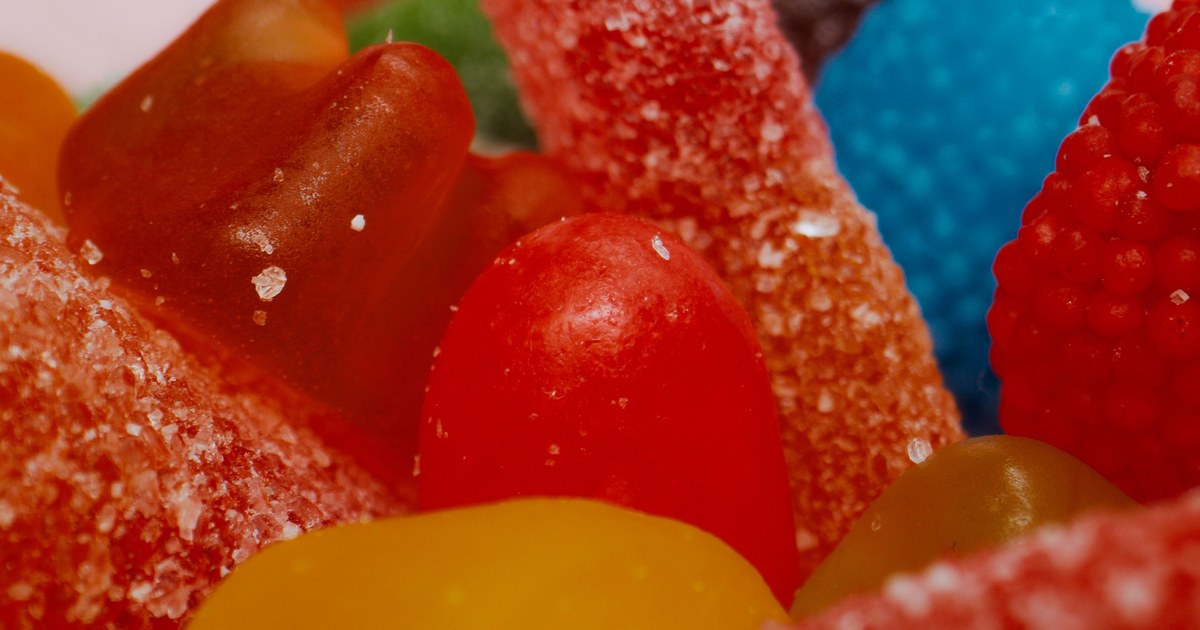
Red 40 is one of the most common colours on a Western ingredient list. It appears as Red 40, FD&C Red No. 40, Allura Red AC or E129, and it turns up in cereal, soft drinks, gelatin desserts, puddings, dairy products and confectionery. Shoppers who have already worked through the carmine question tend to arrive here braced for the same difficulty. So it is worth saying early that “is red 40 halal” is a narrower question than it looks, and the reason lies in what the dye is made from rather than in any disagreement between scholars.
Red 40, also called Allura Red AC or E129, is a synthetic colour the FDA lists among its certified colour additives, meaning it is manufactured rather than extracted from a plant or an animal. No organism is involved, so the doubt named authorities raise sits with the carriers and the facility rather than with the dye molecule itself.
What Red 40 actually is
The US Food and Drug Administration sorts food colours into two groups, and the distinction it draws is the most useful thing on the label for a halal reader. Exempt colours, in the FDA’s description, are pigments from natural sources such as vegetables, minerals or animals, and the agency gives annatto extract, dehydrated beets, caramel, beta-carotene and grape skin extract as examples. Certified colour additives are the synthetic colourings, used, the FDA says, for intense uniform colour and because they blend easily. Every new batch of a certified colour has to go through batch certification, in which the FDA analyses a representative sample and its chemical composition before that batch may be used in food.
FD&C Red No. 40 sits squarely in the certified group. The FDA lists nine certified colour additives approved for food in the United States and names Red 40’s typical uses as cereal, beverages, gelatins, puddings, dairy products and confections. Being certified means the colour is synthesised in a chemical plant. It is not pressed from a fruit, not rendered from an animal, and not farmed from an insect. There is no slaughter question attached to it because there is no animal anywhere in its history.
Why “is red 40 halal” lands differently from carmine
Put E129 next to E120 and the difference is structural rather than a matter of degree. As the post on carmine and the insect-dye question sets out, carmine is genuinely contested: it is extracted from cochineal insects, and the schools of Islamic law reach different published conclusions about consuming insects, with further reasoning applied to whether a processed extract carries the same ruling as the creature. That is a live scholarly disagreement, and flattening it would be dishonest.
Red 40 does not present that problem, because there is no organism whose status has to be assessed. The label rules themselves reflect the gap. The FDA notes that colour additives exempt from certification may generally be listed collectively as “artificial colors” or “color added” without naming each one, and then makes a single exception: carmine and cochineal extract must be identified by name on the label. Regulators singled out the one colour with a living source. Red 40 is named on the label as a matter of routine, because all certified colours are, and that name points to a chemical specification rather than to a supply chain of animals.
This is why the two ingredients belong in different mental boxes. One is a question about a ruling. The other, at most, is a question about a factory.
The caveat that does apply
Naming that caveat properly matters, because “synthetic” is not the same as “settled”. IFANCA, the Islamic Food and Nutrition Council of America, places “Artificial & natural colorings” in the “Investigate Further” section of its Halal Shopper’s Guide to Ingredients rather than treating them as automatically fine. IFANCA describes that whole category as components used in small quantities that can contain subcomponents mainly derived from haram animals, alcohol, or halal animals slaughtered by non-Muslims, and it encourages shoppers to contact the manufacturer to establish the source of an ingredient.
Applied to a synthetic dye, that concern is not about the colour molecule. It is about everything that arrives with it. Colourants are rarely dosed as pure powder into a recipe: they are supplied as preparations, blended with carriers, diluents, coating agents or solvents, and they are made and packed on equipment that also runs other products. Any one of those companion ingredients can have a source worth checking, and none of them are visible on a finished pack that simply reads “Red 40”. This is the same shape of problem as the one described in the post on mono- and diglycerides, where an additive with a single name can trace back to more than one origin depending on the manufacturer.
A label can be read; a supplier’s blending and equipment cannot be read off a packet. Not every additive carries this hidden layer, though: our post on xanthan gum covers a thickener whose fermentation source is usually traceable and stated, which is the more reassuring shape this same kind of question can take. A certification mark from a body you follow is what closes the gap on a synthetic dye’s carriers, because the certifier has audited the supplier rather than guessed at it.
The FDA phase-out is a different story entirely
Red 40 has been in the news, and it is worth keeping that story separate so the two do not get tangled. On 22 April 2025, the US Department of Health and Human Services and the FDA announced a series of measures to phase out petroleum-based synthetic dyes from the American food supply. The announcement described establishing a national standard and timeline for industry to move from petrochemical-based dyes to natural alternatives, beginning the process of revoking authorisation for Citrus Red No. 2 and Orange B, working with industry to eliminate six remaining synthetic dyes including FD&C Red No. 40, and fast-tracking approval of new natural colour additives.
None of that is a halal ruling, and it is not evidence of one. The FDA framed the move around petroleum-derived chemistry and children’s health, which is a food-safety and public-health policy matter rather than a question of Islamic dietary law. A dye being phased out for health-policy reasons says nothing about whether an authority considers it permissible to eat.
There is one practical consequence worth noticing, and it runs in the opposite direction to what people expect. If manufacturers replace certified synthetic colours with natural alternatives, some of those replacements have sources that do raise the question a synthetic dye did not. Carmine is the obvious example. A reformulated pink product may be more “natural” and, for a shopper following a school that treats insects as impermissible, harder to place than the version it replaced. Reformulation is worth re-reading the label for, not assuming.
The quick read at the shelf
Find the colour line. If it names Red 40, FD&C Red No. 40, Allura Red AC or E129, you are looking at a certified synthetic colour with no plant or animal origin, and IFANCA’s guidance points you at the carriers and the manufacturing setting rather than at the molecule. If it names carmine, cochineal or E120, you are in the genuinely contested territory that post covers. If it says only “artificial colors” with no further detail, the FDA’s own labelling rules tell you carmine is not among them, since carmine has to be named. The general reading order for a packaged food still applies, and a certification mark shortcuts all of it.
Zabihah reads the printed ingredient list and gives AI-assisted general guidance from it. It can tell you a colour is a synthetic certified additive rather than an animal-derived one, and it can flag where a named authority asks you to investigate further. It is not a fatwa and not a substitute for certification, and it cannot see inside a factory. For a specific pack, an official halal certification and your own scholar or certifying body remain the deciding voices.