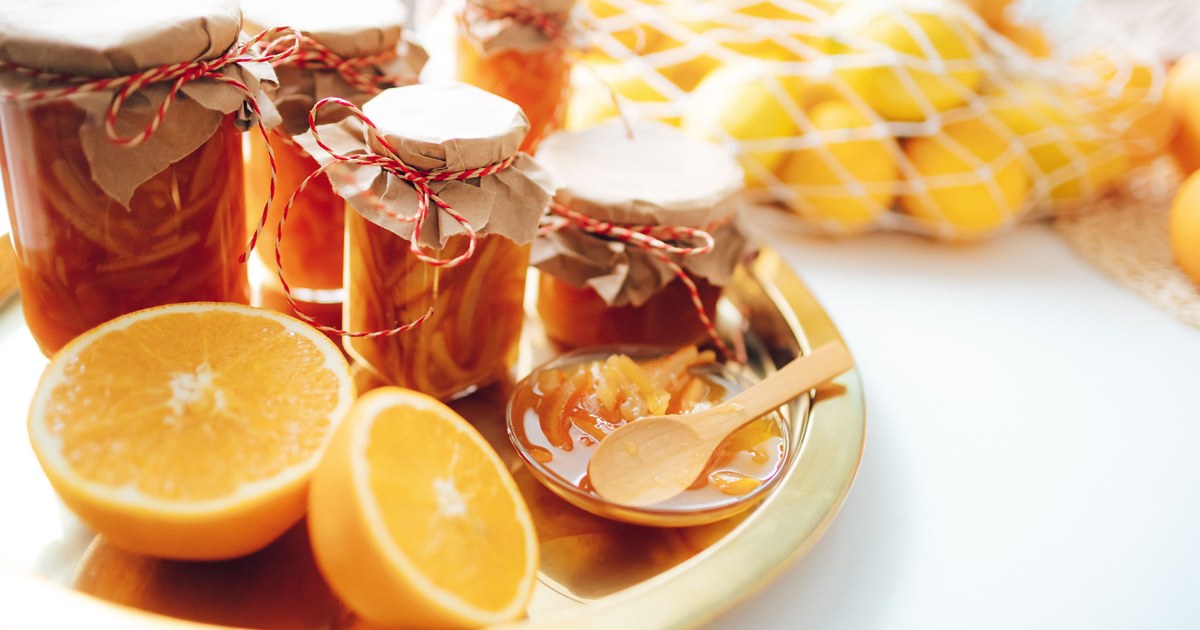
Pectin turns up in the same places gelatine does. It sets jam, it firms up fruit snacks, it thickens yogurt drinks and fruit fillings (where it is one of the reassuring lines in is yogurt halal), and on a jar of marmalade it may be the only additive named at all. Shoppers who have learned to stop at every gelling agent on a label often stop here too, which is a reasonable habit, and the question “is pectin halal” is usually asked by someone who has just spent a while working out whether the gelatine two shelves over was beef, pork, or unstated.
The short answer to “is pectin halal” is that pectin is a plant carbohydrate, not an animal product. Wikipedia describes it as a structural polymer in the cell walls of land plants, produced commercially from dried citrus peels and apple pomace, both by-products of juice production. Because the raw material is fruit, the animal-source question that gelatine raises does not arise for pectin itself.
What pectin is made from
The detail matters, because “plant-based” is a claim that shoppers hear constantly and can rarely verify. In pectin’s case the supply chain is unusually plain. Wikipedia’s entry states that the main raw materials for commercial pectin production are dried citrus peels, at roughly 85 per cent, and apple pomace, at roughly 14 per cent, and that both are by-products of juice production. It is the leftover peel and pulp of fruit that has already been pressed.
On a European label it appears as E440, split into E440(i) for non-amidated pectins and E440(ii) for amidated pectins. The International Numbering System uses 440. Wikipedia lists its functions as gelling agent, thickening agent and stabiliser, with the classical use being the set in jams and marmalades, alongside applications in confectionery, dairy products, medications and as a fat substitute in baked goods.
Why a plant origin removes the question gelatine raises
Gelatine’s difficulty is not that it is an additive. It is that the additive is an animal. Wikipedia describes gelatine as derived from collagen taken from the skin, bones and connective tissues of animals such as cattle, chickens, pigs and fish, and notes that most gelatine comes from pork skins, pork and cattle bones, or split cattle hides. A label that prints the word “gelatine” has named a class of animal products without naming the animal or the slaughter, and that is exactly why the question keeps coming back on marshmallows and on a boxed gelatin dessert, where the setting agent is effectively the product.
IFANCA and the American Halal Foundation both treat that ambiguity as a stopping point rather than an open question. IFANCA, the Islamic Food and Nutrition Council of America, places gelatin in the avoid column of its Halal Shopper’s Guide to Ingredients rather than in its investigate-further column. The American Halal Foundation lists gelatin among haram ingredients when it is derived from pig or from animals not slaughtered according to Islamic requirements. That is not the only published reading of an unspecified-source gelatin: some scholarly answers set out a minority istihalah (transformation) argument for why heavy processing can change a gelatin’s ruling regardless of origin, against the majority view that origin still governs. Neither IFANCA’s guide nor AHF’s list names pectin at all. Neither guide claims to be exhaustive, so that silence is not proof on its own, but it is consistent with the structural reason pectin does not raise the same question gelatin does: a polysaccharide pressed out of orange peel has no species and no slaughter behind it, so there is nothing of the animal-sourcing kind for either list to flag.
That is the whole of the difference. Gelatine puts an unanswerable question on the label. Pectin does not put one there. Setting agents are not a single category of concern; they are a category where the origin decides everything. The same logic runs through mono- and diglycerides, the emulsifier that gets two answers precisely because its fat can be plant or animal and the label does not say which.
What a careful shopper still checks
Saying that pectin itself raises no animal-source question is not the same as saying a pectin product needs no reading, and there are three honest caveats.
The first is the rest of the recipe. A fruit snack can use pectin for its texture and still carry gelatine elsewhere in the formula, and confectionery panels sometimes name both. Pectin on a label is a statement about one ingredient, not a statement about the product. Read the full list rather than stopping at the reassuring line.
The second is processing aids, which never appear on a consumer panel. Wikipedia’s description of conventional pectin manufacture is hot acidified water extraction, followed by filtration, alcohol precipitation, washing and drying, with the alcohol named as ethanol or isopropanol. That is a solvent used and removed during manufacture rather than an ingredient of the finished pectin, but it is the kind of detail that certifiers examine and labels do not report. Amidated pectin adds a further step, with some of the galacturonic acid converted with ammonia to a carboxylic acid amide. Whether a given process meets a given standard is a matter for a certifying body, not for a shopper reading a jar.
The third is that “plant-derived” and “certified” are separate statements, and only one of them is an audit. This is worth holding steady in both directions. Where an ingredient is genuinely insect-derived, as with carmine and the E120 question, scholars and certifiers reach different published conclusions and the disagreement is real. Pectin is not that case. It is the ordinary case of a plant ingredient whose origin is not in dispute, and the remaining questions are about the whole product rather than about the additive.
The quick read at the shelf
Find the gelling agent on the panel. If it reads pectin, fruit pectin, or E440, the ingredient is a fruit-derived polysaccharide and the animal-source question does not apply to it. Then keep reading, because gelatine, insect-derived colour and unspecified emulsifiers can all sit further down the same list. If the pack carries a halal certification mark from a body you follow, the processing aids and the facility have been looked at by someone whose job that is, which no ingredient panel can tell you on its own.
Zabihah reads the printed ingredient list and gives AI-assisted general guidance from it, so it can tell you that a panel names a plant gelling agent rather than gelatine, and it can flag the lines a named authority would ask you to investigate further. It is not a fatwa and it is not a substitute for certification, and it reads labels rather than inspecting a factory or a supplier’s process. For a specific product, an official halal certification and your own scholar or certifying body remain the deciding voices.