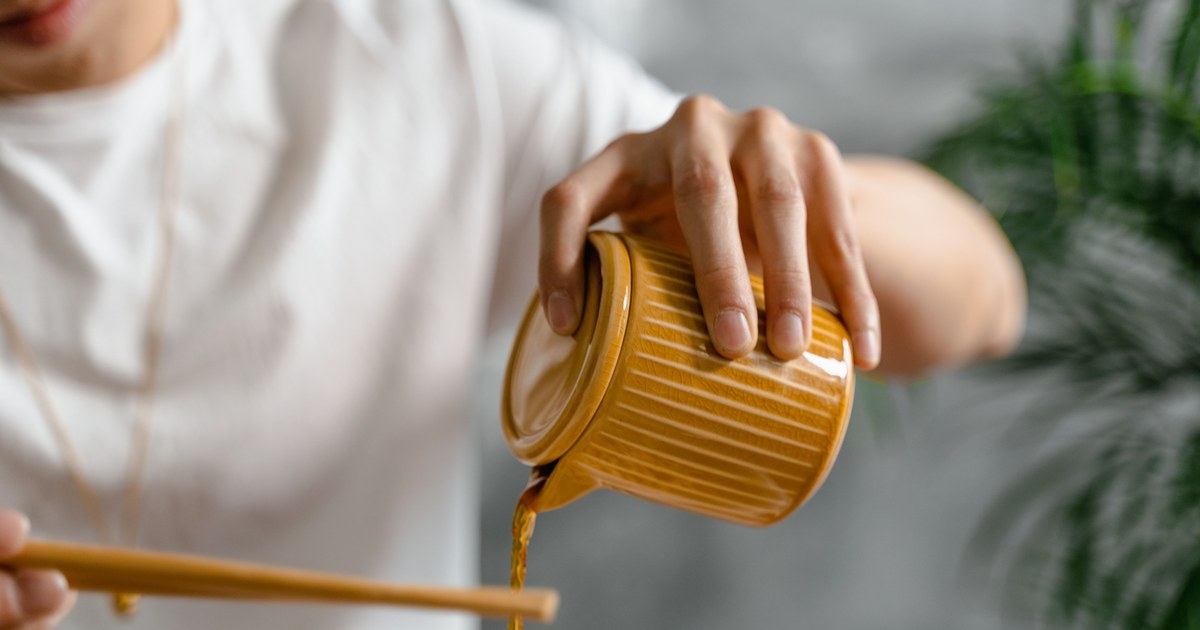
Soy sauce is one of the few kitchen staples whose ingredient list looks completely innocent and still worries people. Soybeans, wheat, salt, water. Nothing on the bottle mentions alcohol, and yet the question keeps coming back, usually after someone reads that traditional brewing produces ethanol as a byproduct. The bottle is not hiding anything. It simply does not report a substance that was never added as an ingredient.
The core of “is soy sauce halal” is that naturally brewed soy sauce carries a small residual alcohol nobody put in it, created by the fermentation that makes the sauce taste like soy sauce. That is not the same category as an intoxicating drink, and it is a question named scholars and certifiers have addressed directly, though they do not all draw the line in the same place.
Where the alcohol comes from
Kikkoman’s own account of how soy sauce is made describes a two-stage process. First comes koji, the mould culture that the company calls one of the most important elements in making soy sauce, which ferments the raw materials and produces the characteristic colour, taste and aroma. The koji is then mixed with a salt and water solution to make moromi, the mash that is aged in tanks. Kikkoman writes that inside those tanks, through the action of microorganisms, various changes occur including lactic acid and alcohol fermentation, which create the rich flavour, aroma and colour unique to soy sauce.
So the ethanol is not a preservative and not an additive. It is a product of the same yeast activity that produces the flavour compounds, arriving in the bottle for the same reason the sauce tastes the way it does. This matters when placing the question, because “alcohol was added to this food” and “this food produced a little alcohol while becoming itself” are different situations, and every scholarly answer below turns on that distinction.
How much is actually there
Precision is worth more than a round number here, so it is better to report who said what. Wikipedia’s entry on soy sauce states that soy sauce may contain more than one per cent alcohol and may therefore run afoul of liquor control legislation. The question submitted to AMJA, the Assembly of Muslim Jurists of America, put the figure higher for one specific product, stating that Kikkoman soy sauce contains greater than two per cent alcohol by volume and that the alcohol is not added but results from the fermentation process.
The general pattern those two sources describe is a low single-digit percentage, varying by brand, style and how long the moromi was aged. What neither source supports is a single universal figure, and any page that gives you one exact number for all soy sauce is telling you more than it knows. A label will not settle it either, since a byproduct that is not an ingredient is not declared. That is the same structural problem as an ingredient like glycerin, whose label never names its source: the printed panel is silent on the very thing you want to know.
What AMJA’s published answer says
AMJA has a published fatwa answering this exact question, titled “Is This Soy Sauce Halal?” and answered by Shaykh Waleed Basyouni. The answer holds that it is permissible to eat food that has soy sauce in it, on the reasoning that all food is lawful unless there is proof that it is unlawful, and that the alcohol present will not intoxicate the person who consumes it. The ruling turns on intoxication rather than on the mere detection of ethanol.
That is a named, published position from a recognised body, and it is the single most directly relevant thing a shopper asking this question can read. It is also not the only position, and it would be dishonest to present it as though it were.
Where certifiers draw different lines
The Fatwa Committee of Majlis Ugama Islam Singapura has published a ruling on ethanol that reaches the subject from a different direction. It permits the use of ethanol, natural and synthetic, as a solvent, as long as it is not produced from prohibited products such as khamr. It then sets numerical limits: a maximum of 0.5 per cent ethanol in flavouring and a maximum of 0.1 per cent in the final product. It also restricts the permission to flavouring purposes, stating that ethanol used in a food or beverage product not for the purpose of flavouring is not permitted.
Read side by side, these are two genuinely different tests. AMJA’s answer asks whether the food intoxicates, and it addresses soy sauce by name. The MUIS ruling is scoped to ethanol used deliberately as a solvent in flavouring, asking whether a measured concentration sits under a stated cap and whether the ethanol came from a prohibited source. It does not address alcohol that fermentation leaves behind inside a food that is itself the finished product, so it is a different question rather than a competing verdict on the same one. Naming that difference plainly is more useful than forcing a comparison, and readers who follow a particular certifier or school should take the question to them.
IFANCA, the Islamic Food and Nutrition Council of America, adds a framing worth keeping. Its article on alcohol separates two meanings of the word: khamr, the intoxicating drink, and alcohol as a chemical family of compounds. It also notes the regulatory reality that when a product’s alcohol content is under 0.5 per cent it does not have to appear in the ingredient list at all, which explains why so many foods say nothing about it. This is the same “alcohol from processing, not as a drink” territory covered in the post on vanilla extract and where certifiers actually disagree, and the disagreement there has the same shape as the one here.
Brewed and chemically hydrolysed are not one product
There is a second production route, and almost no page on this subject mentions it. Wikipedia notes that some brands of soy sauce are made from acid-hydrolysed soy protein instead of being brewed with a traditional culture, and that this takes about three days rather than the months of a moromi ageing.
That difference is not a detail. A non-brewed sauce made by acid hydrolysis has no yeast stage, so it has no fermentation alcohol to leave behind. The entire question this article is about does not arise for it. Such products often declare themselves on the label with wording like hydrolysed vegetable protein or hydrolyzed soy protein, while a naturally brewed sauce usually carries a short list of soybeans, wheat, salt and water plus a “naturally brewed” claim. Reading which route a bottle took tells you which question you are actually holding, which is the sort of distinction the vocabulary of halal, haram and mushbooh exists to keep straight.
It is also a reminder that a single product can raise more than one separable question at once, the same structural point our post on pizza makes about splitting the cheese question from the topping question rather than trying to answer a whole dish in one word. Here nothing can be taken out, because the alcohol is a consequence of the process itself. The only ways to change the answer are a different production route or a certifier who has assessed the finished sauce.
The quick read at the shelf
Look for the production route first. “Naturally brewed” with soybeans, wheat, salt and water means fermentation happened and a small residual alcohol is expected, whether or not the bottle says so. Wording about hydrolysed protein points to the acid route with no fermentation stage. Then look for a halal certification mark from a body you follow, because a certifier has actually measured the finished product against its own published standard, which is the only thing that resolves the threshold question for a specific bottle. If you follow AMJA’s published answer, that answer addresses this food by name. If you follow a certifier that publishes numeric ethanol caps, ask that certifier about the brand in front of you.
Zabihah reads the printed ingredient list and gives AI-assisted general guidance from it, so it can tell you a sauce is a brewed style rather than a hydrolysed one and flag that fermentation alcohol is part of that process. It cannot measure what is in the bottle, and it is not a fatwa or a substitute for certification. For a specific product, an official halal certification and your own scholar or certifying body remain the deciding voices.