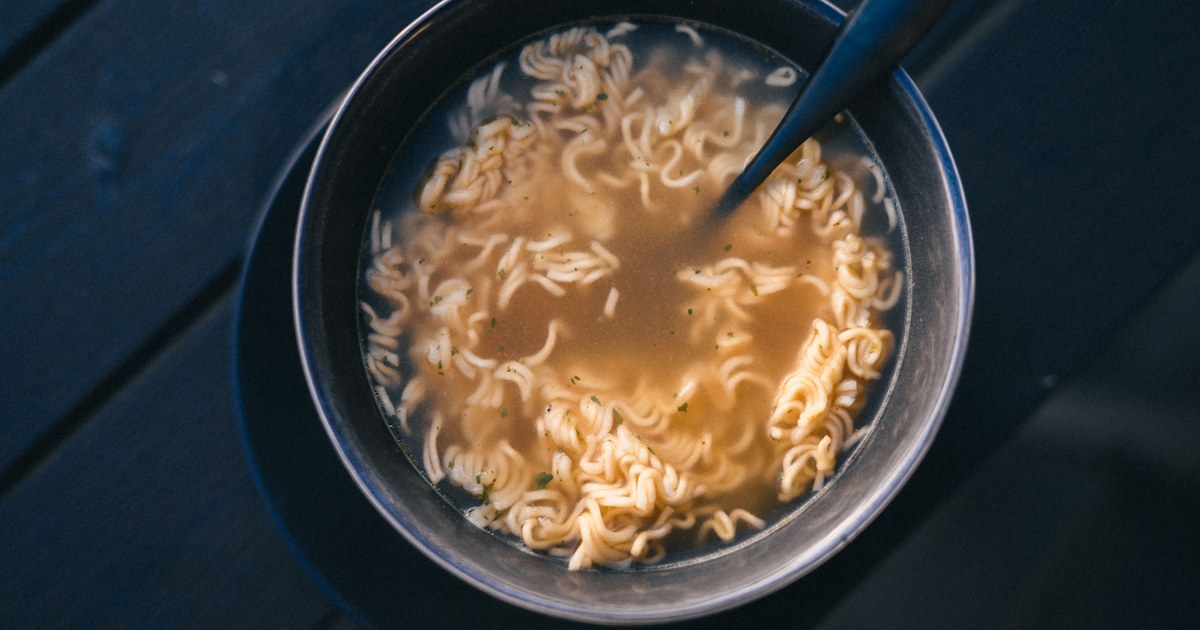
MSG turns up on ingredient panels as monosodium glutamate, flavour enhancer 621, or simply E621, and it is in instant noodles, stock cubes, crisps, seasoning mixes and a great many ready meals. Most articles answering “is MSG halal” stop after a single sentence: MSG is fermented from plant sugars, so there is nothing animal in it. That sentence is true, and it is also the part of the story that a real recall in Indonesia showed to be incomplete.
The honest answer to “is msg halal” starts with what the molecule is made from. Wikipedia’s entry on monosodium glutamate states that as of 2016 most MSG worldwide is produced by bacterial fermentation, using Corynebacterium species cultured with ammonia and carbohydrates from sugar beets, sugarcane, tapioca or molasses. Nothing animal enters that description. What the finished molecule is made from, however, is not the same question as what the fermentation was fed.
What MSG is and how it is made today
Glutamic acid is an amino acid that occurs naturally in ordinary foods. The IslamQA answer on MSG, given by Mufti Abdullah Patel of Muftisays in London, opens on exactly that point, noting that glutamic acid is present in meat, fish, poultry and milk before any manufacturer gets involved. MSG is the sodium salt of that amino acid, and it is designated E621 in the European Union’s additive numbering.
The same answer describes the industrial split: around 90 per cent is manufactured by fermentation using molasses from cane or beet sugar, and around 10 per cent, in South-East Asia, from sago and tapioca starch. On that basis the answer states that monosodium glutamate is permissible, while acknowledging that rumours have circulated about animal enzymes used in some South Asian production, and adding that the writer had not come across any doubtful monosodium glutamate to date.
That is a named scholarly position, attributed, and it is the position most shoppers are looking for. It is worth reading the caveat in it as carefully as the conclusion, because the caveat is what the next section is about.
The recall that complicated the easy answer
In January 2001, the Indonesian subsidiary of Ajinomoto, the Japanese seasoning company, became the subject of a national food scandal.
FoodNavigator reported on 12 January 2001 that Ajinomoto had apologised to the Muslims of Indonesia in several major newspapers after its MSG was found to have been made using pig enzymes, and that the Indonesian Council of Ulemas, the MUI, had issued a fatwa banning its consumption. The same report noted that the company had begun withdrawing all products containing pig enzymes from the market and expected the process to take three weeks.
Just Food, reporting on 9 January 2001, filled in how it came to light and how far it went. The MUI, it reported, uncovered the illegal use of a material called bactosoytone when it began an audit of the company in September 2000. The Indonesian health minister mandated a recall of 3,000 tonnes of MSG products from Indonesian shelves. The company’s factory and warehouses in East Java were sealed, and seven executives were declared suspects by the national police, two of them facing potential five-year sentences under consumer protection law. The same report records the MUI’s own explanation for the three-month gap between the audit and the announcement: in the words of its head, K.H. Maruf Amin, it “did not want to scare the public until it got the facts right.”
The aftermath is as instructive as the event, because the parties involved did not all reach the same conclusion. Wikipedia’s entry on Ajinomoto records that immediately after the incident the Food and Drug Administration of the Indonesian government announced that Ajinomoto’s end product did not contain pig-derived substances, and that Ajinomoto stated its products were derived from soybeans. The certifier had withdrawn its approval and issued a fatwa; the state regulator was pointing at the finished molecule. Both of those are matters of record, and the gap between them is the point rather than an embarrassment to be smoothed over. Which reading a reader follows is a matter for that reader and their own scholar, not for this article.
Why “is MSG halal” is not settled by the molecule alone
Here is the part that most writing on this additive leaves out.
Bactosoytone was never a listed ingredient of the finished seasoning. It was a material used inside the production process, which is precisely why the Indonesian regulator could say the end product contained no pig-derived substances while a certifier had still withdrawn its approval. Nobody found it by reading a packet, because a packet could not have shown it. It took an audit of the company, begun by a certifier and running for months, to find it at all.
That is the whole lesson, and it generalises well beyond one company and one country. A fermentation product has two separate origin questions. The first is what the end molecule is, and for MSG that answer is clean and public. The second is what the bacteria were grown on and what was added to help them along, and that answer lives in a purchasing spec sheet no shopper will ever see. The two can diverge, and when they do, the label reports only the first.
This is the same shape of problem as the one behind enzymes on an ingredient list, where a single word covers a processing aid whose source the panel never states. It is also the reason the reassuring comparison with xanthan gum only takes a reader so far: a fermented-from-corn thickener answers the molecule question the same way MSG does, and leaves the medium question equally invisible.
What certification is actually for
Read this way, the Ajinomoto episode is not an argument for avoiding MSG. It is the clearest available argument for what a certification mark buys.
The gap that opened in Indonesia was not a labelling failure and not a chemistry failure. It was a supply-chain fact that only an auditor with access to the plant could establish, and it was in fact an auditor with access to the plant who established it. That is precisely the work described in the post on what a certifier checks before approving a product: the inputs behind the inputs, the processing aids, the growth media, the things that never reach an ingredient panel because regulations do not require them to.
An app cannot do that. Neither can a shopper. A certifier can, and this is the case that proves it, because a certifier did.
The quick read at the shelf
If the panel says monosodium glutamate, MSG, flavour enhancer 621 or E621, you are looking at an additive that Wikipedia describes as produced by bacterial fermentation of plant carbohydrates, and that the IslamQA answer above treats as permissible on that basis. That covers the molecule.
What it does not cover is the fermentation medium and the processing aids behind it, which no packet states and which the Indonesian recall showed can differ from what a buyer assumes. If that matters to you for a particular product, a halal certification mark from a body you follow is the only thing that closes it, and checking for one is the last step in the general order for reading a packaged food.
Zabihah reads the printed ingredient list and gives AI-assisted general guidance from it, so an E621 line comes back with what named authorities say about fermented MSG and with the manufacturing question flagged rather than hidden. It is not a fatwa and not a substitute for certification, and it cannot see a growth medium, a processing aid or the inside of a plant from a photograph of a packet. For a specific product, an official halal certification and your own scholar or certifying body remain the deciding voices.