A halal logo on a box is the final step of a long process, and it is the only part of that process a shopper ever sees. Behind it sits an audit: documents a manufacturer had to produce, a facility somebody walked through, a decision taken by people who were not the auditor, and a schedule of return visits. Which mark belongs to which body, and how their criteria differ, is a separate question covered in halal certification marks explained. This post is about what happens before any of those marks gets printed, because knowing what the halal certification requirements involve changes how much weight a mark can carry.
Halal certification requirements are not a single ingredient check. Published procedures from named certifiers describe an application listing ingredients, suppliers and processes, a documentation review, an on-site audit of equipment and sanitation, a certification decision taken by a committee rather than by the auditor, and then surveillance audits for as long as the certificate runs.
The application: what a manufacturer hands over before anyone visits
IFANCA, the Islamic Food and Nutrition Council of America, publishes its own description of the certification process, and it begins on paper. The first step is an application explaining the production process, followed by a review of that information by the organisation, with particular attention to the type of product and its components. IFANCA notes that a manufacturer may be required to replace any ingredients that do not meet its guidelines before certification can proceed.
The American Halal Foundation’s published certification process and audit requirements document sets out the same stage in more detail. AHF asks an applicant for its legal status, its raw materials, and its product safety management system information including HACCP studies, along with the number of shifts and the number of employees on each shift. It also asks for a detailed production flow chart showing the full production process of the product to be certified, and a list of every product the company makes.
Two things are worth noticing about that list. It is about the supply chain rather than the finished label, and it covers everything the site produces rather than only the item that will carry the mark. A certifier is asking what else runs through the same building, which is a question no ingredient panel answers.
The site visit: equipment, sanitation and the cross-contamination question
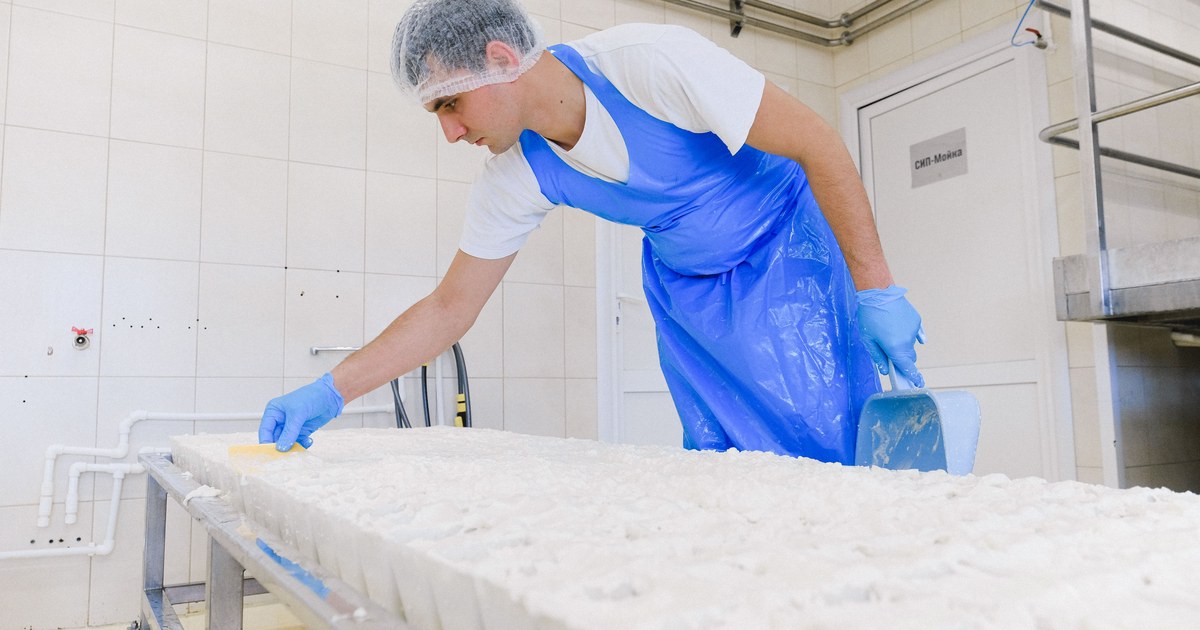
IFANCA’s third step is inspection and approval of the manufacturing facility, and its description of what that covers is specific: production equipment as well as the physical ingredients, cleaning procedures, sanitation and the chance of cross-contamination. Where meat is involved, IFANCA’s process adds verification of how animals were treated during raising, transport and pre-slaughter holding, along with slaughterhouse requirements involving trained Muslim personnel and a review of the slaughter procedures.
AHF splits the visit into two parts. Its stage 1 audit reviews the documentation covering halal requirements and any outsourced control measures, verifies that the relevant licences exist, and assesses whether the client is ready for the more detailed stage 2. Stage 2, AHF states, focuses on the actual implementation of the halal management system and whether that system is effective at managing halal integrity and product safety. AHF states the interval between the two stages should not exceed six months, and that a longer gap means repeating stage 1, and it requires that each site of a multi-site organisation is assessed and certified separately.
That last requirement matters more than it sounds at the shelf. A company can be certified at one plant and not at another, which is why the unit of certification is a product and a site rather than a brand name.
The decision belongs to a committee, not to the auditor
The step almost nobody pictures is the one that gives a mark its weight. In AHF’s published procedure, once non-conformances have been corrected and the audit team has verified that the corrective actions worked, the documents go to the head of a Halal Certification Committee. That committee produces a report carrying a recommendation, and the committee then decides on certification based on the documents, the results of the evaluation, its review, and any other relevant information. Separately, AHF states that a review of all the information and results must be carried out by a person who was not involved in the evaluation process.
Splitting the audit from the decision, and the decision from the review, is the structural reason a certification amounts to more than one visitor’s impression of a factory. AHF states that it adheres to the requirements of ISO/IEC 17021:2015 and ISO/IEC 17065:2012 in order to ensure the integrity, impartiality and consistency of its certification process, and those are the general conformity-assessment standards that impose this kind of separation.
IFANCA’s own sequence then runs into the commercial and administrative steps: determining the cost and the fees and signing the contract, payment, issuance of the halal certificate, and printing of the halal markings. The logo is the ninth step of nine.
Halal certification requirements do not stop at the certificate
This is the part that changes how a mark should be read, and it is why the subject belongs in the trust column rather than the ingredient column.
AHF describes an audit programme for each client made up of a two-stage initial audit, a surveillance audit in the first year and again in the second year, and a recertification audit in the third year before the certificate expires. The three-year cycle begins with the certification decision, and AHF states the certificate will be suspended or cancelled at any point if the certified organisation is found to contravene the approved halal standard and its related requirements.
IFANCA’s published policy works the same way. To maintain the certificate, the client must continue complying with the halal requirements, and IFANCA states it may conduct surveillance audits to ensure the facility continues to meet them. Extending a certificate’s scope requires a request, followed by an evaluation and an approval decision before anything is extended, and IFANCA may run a surveillance audit before approving that extension. Renewal is a request the client has to make rather than something that happens automatically. IFANCA also describes several certificate types, including site registration, annual certificates running one to three years, batch certificates and shipment certificates.
There is a layer above all of that. IFANCA’s accreditations and recognitions page lists it as accredited by ANAB, the ANSI National Accreditation Board, along with BPJPH, EIAC, GAC, HAK and PNAC, and as recognised by bodies including JAKIM in Malaysia, MUIS in Singapore, SASO and the SFDA in Saudi Arabia, and CICOT in Thailand. Accreditation is the mechanism by which somebody checks the certifier, and it is the honest answer to why an audit report deserves more weight than a manufacturer’s own assurance.
Put together, a certification is a live relationship on a clock rather than a verdict issued once and kept forever. It can lapse, be suspended, or cover a scope that has changed since the packaging was designed. That is why looking a product up on the certifier’s own public register is worth the minute it costs.
Why an ingredient scan cannot replace an audit
An ingredient list is a snapshot of a finished formula as printed on one particular day. Everything described above concerns things a printed panel structurally cannot contain: who supplied the raw material, what the equipment ran before this batch, whether the sanitation procedure was followed, and whether the site is still compliant this month.
The clearest illustration is rennet in cheese, where the packet names a class of substance and not its origin, so no amount of careful reading resolves it. An audit does resolve it, because the auditor has seen the supplier specification. That is the same boundary set out in our post on what a halal scanner can and cannot check, and it is not a limitation a better app removes.
The quick read at the shelf
If a pack carries a mark, treat it as a claim that a named body audited a named site against a written standard, then check the product or company on that certifier’s own register rather than trusting the printed logo alone. If there is no mark, you are back to the ordinary label read, which settles the unambiguous ingredients and leaves the source-dependent ones open. Neither route is a shortcut around the other, and an absent logo is not a verdict.
Zabihah reads what is printed on the pack and gives AI-assisted general guidance on what each ingredient is and where it can come from. It cannot audit a facility, verify a slaughter method or trace a supply chain, which is precisely the work described above. What it produces is general guidance, never a fatwa and never a substitute for official halal certification. For the products that matter to you, the certifier’s own record and your own scholar or certifying body are the deciding voices.