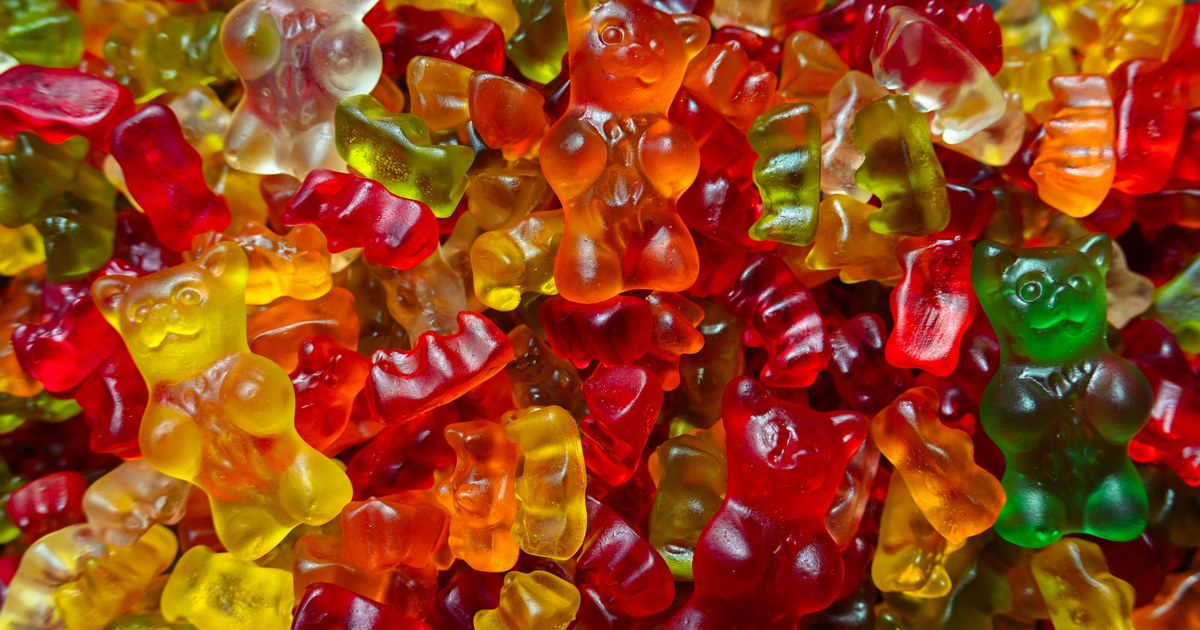
Fruit snacks are the lunchbox staple that looks most like fruit and behaves most like a sweet. The pouches say fruit on the front, the pieces are soft and chewy, and a child who has been told to avoid gummy sweets can reasonably ask why these are any different. The honest answer is that, for the classic Welch’s pouch, they are not very different at all, and Welch’s says so itself.
The question “are Welch’s Fruit Snacks halal” has an unusually direct answer from the manufacturer. Welch’s states that its classic Fruit Snacks, Juicefuls and Fusions are made with either pork or beef gelatin, and it names three products in its range as halal compliant: Absolute Fruitfuls Fruit Strips, Probiotic Yogofruits and Fruit Rolls.
That makes this one of the rare cases where the useful information comes from the brand rather than from reading between the lines of a label.
What is in the classic pouch
Welch’s publishes the Mixed Fruit ingredient list on its own product page: whole fruit puree (grape, peach, orange, strawberry and raspberry), corn syrup, sugar, modified corn starch, gelatin, grape juice concentrate, citric acid, lactic acid, natural and artificial flavors, vitamins C, E and A, carnauba wax, and colours from natural sources such as annatto and turmeric.
Most of that list is fruit, sugars, starch and vitamins. Carnauba wax, the glaze that stops the pieces sticking together, comes from a palm leaf. The line that decides the question is the fifth one: gelatin.
What Welch’s says about the gelatin
On a typical packet, the word gelatin sits on the label with no source, which is what makes so many chewy sweets a question to verify. Welch’s answers it in its FAQ, in two places.
Asked whether its Fruit Snacks are made with pork or other animal products, Welch’s states that the production of Welch’s Fruit Snacks “involves gelatins that contain either beef or pork”. Asked for the source of the gelatin, it states: “We use either pork or beef gelatin in the production of Welch’s Fruit Snacks, Welch’s Juicefuls and Welch’s Fusions.”
The word “either” matters. The FAQ does not say that some flavours use beef and others pork, or give a way to tell one pouch from another. A shopper holding a single pouch cannot determine from the label which gelatin it contains. And even beef gelatin is only acceptable to the bodies below when the animal was slaughtered according to Islamic law, which the FAQ does not claim.
How named bodies read that gelatin
Named bodies have published positions on gelatin. IFANCA, the Islamic Food and Nutrition Council of America, places gelatin in the Haram/Avoid column of its Halal Shopper’s Guide to Ingredients. The American Halal Foundation states that gelatin sourced from pigs is strictly haram, and that bovine gelatin is acceptable only where the animal was permissible and slaughtered according to Islamic law.
Welch’s statement does not give either body what its published standard asks for: the gelatin in the classic Fruit Snacks, Juicefuls and Fusions may be pork, and where it is beef, no halal slaughter is stated. Some scholars hold that processing transforms gelatin enough to change its ruling, a view our guide to halal gelatin sets out with who holds it, but it is not the view these two bodies apply. The same reasoning is behind our answers on gummy bears, with one difference: here, the manufacturer has confirmed the source rather than leaving it open.
The Welch’s snacks the brand calls halal compliant
This is the part most answers leave out, and it is the most useful thing on the page for a parent. Welch’s names two separate lists in its FAQ.
Its gelatin-free list: Welch’s Absolute Fruitfuls Fruit Strips, Welch’s Fruit ‘n Yogurt Snacks, Welch’s Probiotic Yogofruits, and Welch’s Fruit Rolls are, in Welch’s words, “free of animal-derived gelatins”.
Its halal list: Welch’s states that the products in its lineup that are “Halal compliant” are Absolute Fruitfuls Fruit Strips, Probiotic Yogofruits, and Fruit Rolls.
Read the two lists side by side and one product drops out. Fruit ‘n Yogurt Snacks is on the gelatin-free list but not on the halal-compliant list. Welch’s does not say why, and we will not guess. What it shows is that “no gelatin” and “halal” are not the same claim, and that the brand itself draws a line between them. A parent choosing from the Welch’s range has the brand’s own shortlist to work from.
Two cautions keep that shortlist honest. “Halal compliant” is Welch’s own description in its FAQ. The FAQ does not name a certifying body, so it is a manufacturer statement rather than a certification mark, and if you follow a certifier’s standard, look for that certifier’s mark on the pack. And ranges change, so the current FAQ and the pack in your hand outrank any list, including this one.
If you want the gelling done by fruit instead
Fruit snacks do not have to use gelatin. Some are set with pectin, the plant-based gelling agent made from fruit, which our post on pectin explains avoids the gelatin question entirely. Other chewy sweets use a wheat-flour dough instead, as our look at Twizzlers shows. Reading for the setting agent is the fastest way to sort a shelf of fruit snacks: gelatin, pectin, starch or flour tells you most of what you need.
The quick read at the shelf
For the classic Welch’s pouch, the manufacturer has answered the question: the gelatin is pork or beef, without a stated source per pouch. If you want a Welch’s product, its own halal-compliant list is Absolute Fruitfuls Fruit Strips, Probiotic Yogofruits and Fruit Rolls. For any other brand, find the setting agent on the label, and if it says gelatin with no source, treat that as a question to verify rather than an answer.
Zabihah reads the printed ingredient list and gives AI-assisted general guidance from it, so it will flag a bare “gelatin” line in a pouch and tell you when a snack is set with pectin or starch instead. It is not a fatwa and not a substitute for certification, and it cannot tell which animal a batch of gelatin came from or how a factory runs its lines. For the final decision, an official halal certification and your own scholar or certifying body remain the deciding voices.