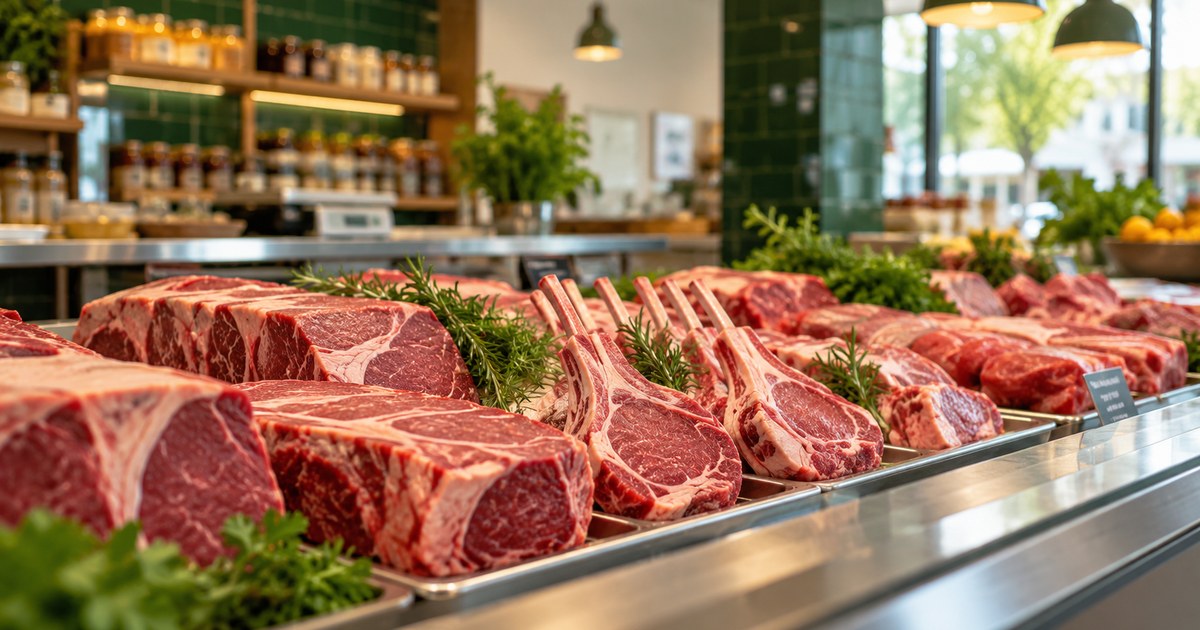
Two words sit side by side on butcher signs, restaurant menus and frozen chicken in North America: halal and zabiha. Many shoppers read zabiha as “halal, but more so”, and pay a little extra for it. Whether that reading is right depends on who you ask, and the organisations that certify meat in the United States do not give the same answer.
Zabiha (also written zabihah or dhabiha) is Arabic for “slaughtered”, and in classical usage it names the method that makes meat halal. Some US certifiers say zabiha and halal therefore mean the same thing. Others say zabiha now signals a stricter standard: hand slaughter by a Muslim, with God’s name, and no stunning.
Both positions come from established organisations, so it helps to see them side by side before looking at a pack.
What the word zabiha means
The American Halal Foundation (AHF) defines it plainly: “Zabiha (also spelled Dhabiha) is an Arabic word meaning ‘slaughtered.’” In Islamic law it refers to the act of slaughter performed in the prescribed way, so in its original sense zabiha is not a separate grade of halal meat. It is the process by which meat from a permissible land animal becomes halal at all.
Halal is the wider word. It covers anything permissible, from bread to water to a business transaction. Zabiha only applies to the slaughter of animals, which is why ISA (Islamic Services of America) notes that the term “does not apply to fish.” If you want the wider vocabulary of permitted, forbidden and doubtful, our guide to halal, haram and mushbooh sets out the three words.
The classical conditions, and where the schools differ
The HFSAA (Halal Food Standards Alliance of America) summarises the classical conditions in its article on the fiqh of slaughter. The slaughterer must be a Muslim or one of the People of the Book. The cut must sever the vessels of the throat, and the schools differ on exactly which: HFSAA reports that the Shafi’is require the windpipe and gullet, while the Hanafis require three of the four vessels. And the name of God is pronounced at the time of slaughter, a practice known as tasmiyah.
Tasmiyah is where a well-known difference appears. HFSAA reports that the majority hold naming God to be necessary, while Imam Shafi’i is reported to regard it as a Sunnah. On the case of a slaughterer who simply forgets, the Hanafi Darul Uloom Deoband answers that the animal remains halal if the name was forgotten, and unlawful if it was left out deliberately. HMS USA (Halal Monitoring Services) takes the same line on intention: an animal on which the name of God is “not mentioned intentionally” is, in its words, considered maitah (carrion).
These differences matter most for machine slaughter, where one recitation may be made over many birds. In its article on tasmiya, HFSAA argues that a single recitation per shift does not meet the requirement. That is a live disagreement among certifiers, not a settled point.
Zabiha vs halal: four US certifiers, four framings
Here are the definitions in each organisation’s own words, because the disagreement lives in the wording.
HMS USA: “There is NO DIFFERENCE between HALAL and ZABIHA HALAL. Zabiha is required to consider meat Halal.” On this view, meat that is not zabiha in the full sense is not halal, and the word zabiha adds no second tier.
American Halal Foundation: “all halal meat is zabiha and all zabiha-halal meat is halal.” AHF reaches a similar conclusion to HMS from a different direction: properly slaughtered meat is both.
ISA: “All Zabiha meat is Halal, but not all Halal-labeled meat is Zabiha Halal.” ISA is describing the market as it exists. A halal label alone may not tell you how the animal was slaughtered, so zabiha has come to carry information that the bare word halal sometimes does not.
IFANCA (Islamic Food and Nutrition Council of America) writes that in the US and Canada, zabihah “has taken on a more specific and stricter definition”: hand slaughter by a Muslim, with tasmiyah, and no stunning. IFANCA also cautions that the word is not used consistently, citing a Canadian product sold as zabihah meat that “is produced through mechanical slaughter.”
Read together, these are not four contradictory rulings so much as two questions answered differently. One is a legal question (what makes meat halal), on which HMS and AHF say zabiha is the requirement. The other is a market question (what a label tells you), on which ISA and IFANCA say zabiha now signals a narrower practice than many halal labels promise.
Stunning: the biggest practical difference
Most of the gap between a halal label and a zabiha label in practice comes down to stunning, and here certifiers hold clearly different positions.
HFSAA states that “stunning should be avoided as much as possible.” It will accept “reversible methods of stunning under strict supervision” but “will not allow lethal and irreversible stunning methods.” In the UK, the HMC (Halal Monitoring Committee) states that it “has not accepted stunning/mechanical slaughter/gassing of animals” since its inception. AHF draws the line at the result: an animal that dies from stunning before the cut is, in its words, “maytah and unequivocally haram.”
So a product certified under a scheme that permits reversible stunning can be halal by that certifier’s standard while falling short of what IFANCA describes as the North American zabihah usage. Neither statement cancels the other. They are different standards, and the certifier’s mark is how you tell which one applies: a shopper who follows HFSAA or HMC would look for a no-stunning standard, while one who follows a certifier that permits reversible stunning would accept it. Our guide to halal certification marks explains how to read them.
Meat of the People of the Book
The other big difference concerns meat slaughtered by Jews and Christians. Quran 5:5 states that the food of those given the Scripture is lawful for Muslims, and the classical schools accept their slaughter in principle. The disagreement is about modern industrial meat.
AHF holds that such meat, “when slaughtered properly, is considered zabiha halal.” HFSAA, after weighing both the lenient and the strict positions, concludes for Western industrial meat that “one has no option but to render such meat as impermissible”, because the conditions of slaughter cannot be assumed to be met. IFANCA notes that the Gulf standard accepts slaughter by Jews and Christians. This is one reason kosher meat is a point of discussion for some Muslims and not for others, a question our post on halal and kosher looks at in more detail.
Why the label alone may not settle it
In the United States there is no federal definition that tells a shopper what zabiha means on a pack. Food Safety News reported in September 2025 on a petition asking the USDA either to define “zabiha halal” as hand-slaughtered without stunning, or to treat it as a third-party certified claim whose definition the certifier publishes. Until something like that exists, the word means whatever the seller or certifier behind it means.
That makes the certifier’s name the most useful thing on the pack. Each certifier publishes its own standard, so you can check whether it permits stunning or machine slaughter. Poultry raises these questions most sharply, which is why our guide to halal turkey covers the machine and hand slaughter positions for birds specifically.
What to look for at the meat counter
Zabiha means slaughtered, and in its original sense it describes the method that makes meat halal. In today’s North American market it often signals hand slaughter by a Muslim with tasmiyah and no stunning, but not every seller uses it that way. When the difference matters to you, look past the word to the certifier, read that certifier’s published standard, and ask your own scholar which standard you follow.
Zabihah reads printed ingredient lists and gives AI-assisted general guidance from them. It is not a fatwa and not a substitute for certification, and it cannot verify how an animal was slaughtered, whether a stunning method was used, or how a supply chain was run. For meat especially, an official halal certification and your own scholar or certifying body remain the deciding voices.
Sources
- American Halal Foundation: Halal vs Zabiha, Is There a Difference?
- HMS USA: Zabiha Halal
- ISA: Differences Between Halal and Zabiha Halal
- IFANCA: Zabihah vs Halal, Is Halal Not Enough?
- HFSAA: Fiqh of Slaughter
- HFSAA: Tasmiya
- HFSAA: Stunning
- HFSAA: Ahlul Kitab Meat
- HMC: Response to KFC on stunning
- Darul Uloom Deoband via IslamQA.org: Reciting Bismillah when slaughtering
- Quran 5:5 (Quran.com)
- Food Safety News: Should the USDA stand behind the Zabiha halal label?