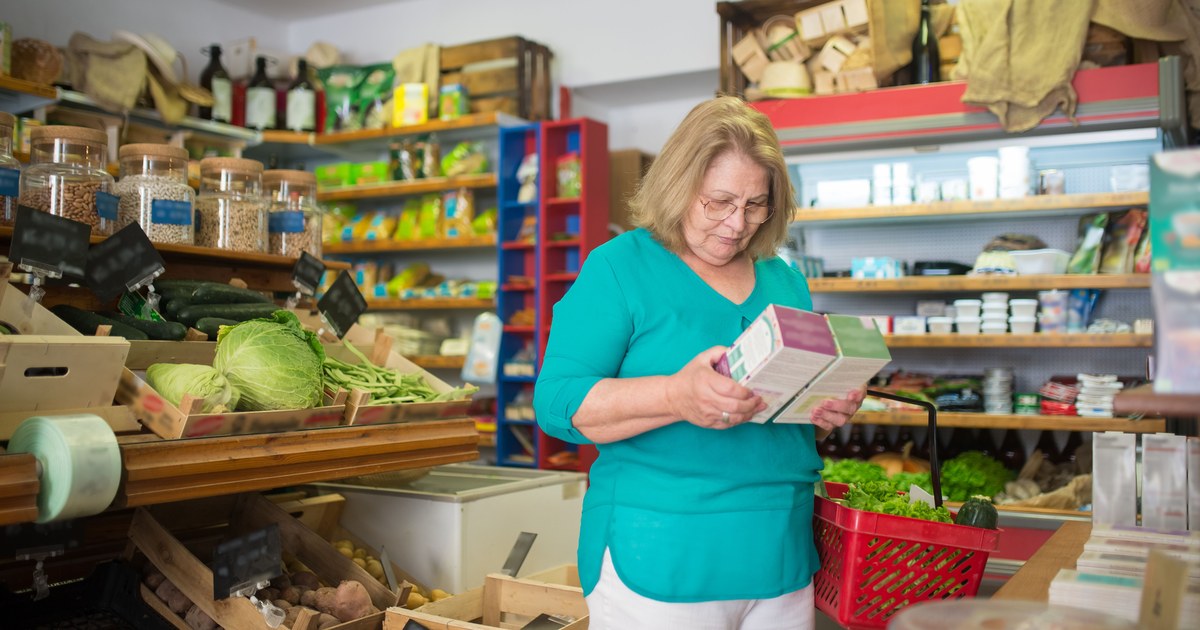
A word printed on a package usually implies that somebody, somewhere, is allowed to check it. “Organic” on a US label means a federal programme stands behind it. Nutrition panels follow federal rules down to the rounding. So it is a reasonable assumption that halal certification in the USA works the same way, and that a pack saying “halal” has passed something official. For most groceries, that assumption does not hold, and knowing exactly where it stops is more useful than either trusting everything or trusting nothing.
Halal certification in the USA is voluntary and market-led rather than government-run. No single federal law sets a religious definition of halal or licenses halal certifiers as a system, so the word on a package rests, in general, on a private certifying body’s own standard and audit rather than a government one. A small number of states police false halal claims by statute, but even those laws enforce honesty rather than define the religious standard itself.
This article covers that general, grocery-shelf picture. Meat and poultry sit under narrower federal rules of their own, which is a separate topic from the one below.
What the federal picture looks like
The American Halal Foundation, an accredited US certifier, puts the federal position plainly in its own published guidance: there is no United States government halal certificate, and unlike countries that regulate halal through a central authority, the US system is market-led. It adds that the US government generally does not certify products as halal, and that credible issuers instead derive their standing from accreditation and from formal recognition by foreign halal authorities such as JAKIM in Malaysia and BPJPH in Indonesia.
That single fact reshapes the whole question. In a country with a national halal authority, a mark is a statement about compliance with a published national standard. In the United States it is a statement about compliance with a particular certifier’s standard, and those standards are not identical to each other. Our guide to what the main certification marks mean sets out where the criteria of different bodies part company, and that variation is not a defect in the system so much as the system itself.
It also means the meaningful question at the shelf is not whether a product is “legally halal”, because nothing in US federal law makes that a category. The question is which body certified it and what that body checks, which is what our post on what a certifier actually checks walks through: ingredient review, facility inspection, cleaning and cross-contamination controls, and ongoing surveillance rather than a one-time approval. IFANCA publishes its own certification process on the same lines.
The states that do have halal laws
Regulation does exist, but it sits at state level and it does a narrower job than most shoppers expect. Three examples show the shape of it.
Michigan’s penal code addresses halal directly. Section 750.297f defines halal as prepared or processed in accordance with Islamic religious requirements, and makes it a misdemeanour for a person, with intent to defraud, to sell or expose for sale any food falsely represented as halal, whether by oral statement or in writing, or to permit the word “halal” to be inscribed on a package that does not qualify. The section also covers premises that sell both halal and non-halal food, requiring each kind to be identified, and requires a business displaying Arabic characters (other than the word “halal” itself) or a similar sign to also display, in English letters of at least the same size, whether it sells only halal, only non-halal, or both.
Illinois has a dedicated Halal Food Act, codified at 410 ILCS 637. Its definitions section describes halal as prepared under and maintained in strict compliance with the laws and customs of the Islamic religion, including the laws and customs of zabiha, as expressed by recognised Islamic entities and scholars. Section 15 then makes a list of halal-related offences a Class B misdemeanour, covering false representations that food is halal, interference with halal identification marks, and the fraudulent use of halal certification marks.
New Jersey took a different route, and its reasoning is the most instructive of the three. The state’s Office of the Attorney General explains that because halal is a religious designation with standards that differ between Muslim communities, the State of New Jersey does not attempt to define halal by statute or regulation. Instead, its Division of Consumer Affairs enforces disclosure: businesses selling food as halal must tell customers the basis on which they make that claim and how they handle and prepare the food, and the state’s Consumer Fraud Act requires businesses to live up to the representations they make. The Division inspects halal establishments year-round and publishes a halal fraud enforcement page for complaints.
What those laws do and do not deliver
Read together, the state statutes answer one question and leave another open. They give a Muslim shopper a legal remedy against a seller who lies, which is a real protection and one that did not exist before these laws were passed. What they do not do is tell anyone what halal means. New Jersey says so explicitly. Michigan’s definition points back to Islamic religious requirements rather than filling them in. Illinois points to the laws and customs of the Islamic religion as expressed by recognised Islamic entities and scholars, which again defers the substance to religious authorities rather than to the state.
That is a deliberate and, on reflection, respectful design. A legislature defining halal would be a legislature ruling on a religious question, and these statutes conspicuously decline to do that. The consequence for a shopper is that the law can punish a false claim but cannot validate a true one. Validation is what a certifier does.
There is also a coverage gap worth knowing about. These laws bind sellers within their own states, and most of them are aimed at the retail and restaurant end of the chain, where a butcher or a takeaway makes a halal claim to a customer in front of them. A packaged biscuit shipped nationwide from a state with no halal statute is not touched by any of them.
What this changes about reading a label
The practical upshot is that a certification mark is not decoration on top of a regulated system. In the United States it is the system. When a mark from a body you follow is present, an organisation with a published standard has reviewed ingredients, inspected a facility and taken on the reputational cost of being wrong. When it is absent, nothing has been certified, and that is a neutral fact about the package rather than a claim about its contents.
The word “halal” printed without a certifier’s name sits in between. It is an enforceable representation in a handful of states and a marketing claim everywhere else, and in either case it does not tell you whose standard was applied. Asking which body certified it is a fair and ordinary question, and it is the same question our reading order for packaged food ends on.
Zabihah reads the printed ingredient list and gives AI-assisted general guidance from it, which is a different kind of help from certification and a narrower one. It can tell you what a panel names and where a named authority would ask you to investigate further. It is not a fatwa and it is not a substitute for certification, and it reads labels rather than inspecting a facility, a supply chain or a slaughter process, as our post on what a halal scanner can and cannot check sets out in full. Because US law leaves the religious standard to religious authorities, an official halal certification and your own scholar or certifying body remain the deciding voices.
Sources
- American Halal Foundation: Who Can Issue Halal Certification in the U.S.?
- Michigan Penal Code, Act 328 of 1931, Section 750.297f
- Illinois Halal Food Act, 410 ILCS 637, Section 5 (definitions)
- Illinois Halal Food Act, 410 ILCS 637, Section 15
- New Jersey Office of the Attorney General: Division of Consumer Affairs Enforces Honesty, Transparency in Sale of Halal Foods
- New Jersey Division of Consumer Affairs: Halal Fraud Enforcement
- IFANCA: Halal Certification 101 for Entrepreneurs