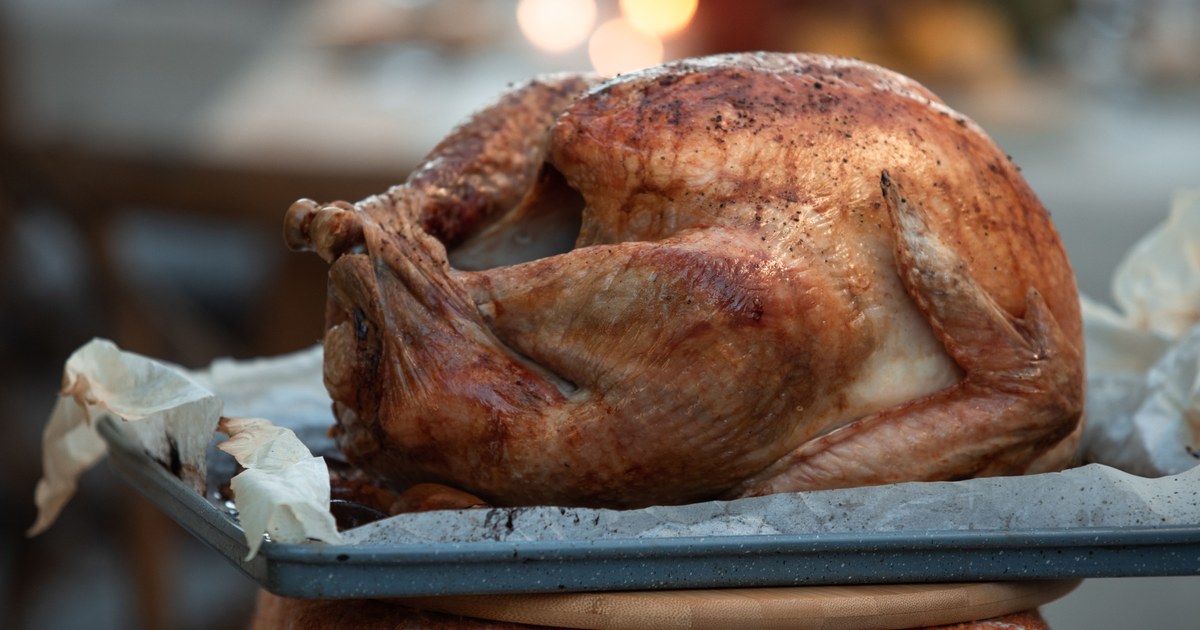
Every autumn the same small problem arrives in a lot of Muslim households. The family wants a turkey on the table for Thanksgiving, the supermarket has a freezer full of them, and only a handful carry any halal claim at all. The ones that do raise a second question: what does “halal turkey” on the wrapper actually promise, and who stands behind it?
A halal turkey is one slaughtered and handled to a halal standard, and the only reliable evidence of that is a named certifier on the pack. The label cannot show how the bird was slaughtered, and certifiers disagree about machine slaughter of poultry, so the certifier you trust decides which turkey qualifies. If a pack says zabiha, zabiha vs halal sets out what each certifier means by the word.
The rest of this piece sets out who holds which position, and the one part of a turkey label that does real work.
Why halal turkey is a certification question, not a label question
Most of the questions this site deals with can be narrowed down by reading an ingredient list. Is there gelatin, is there an enzyme, is there a flavouring that might carry alcohol. A plain whole turkey has no such list to read, or it has one that says “turkey” and little else. The halal status of the bird itself was settled at the moment of slaughter, in a plant you will never see, and nothing printed afterwards can prove how that moment went.
This is not a gap that the US government fills. Food Safety News, reporting on a 2025 labelling petition, put it directly: the USDA’s Food Safety and Inspection Service does not get involved in defining religious standards, such as what is or is not halal. Federal poultry rules do recognise religious slaughter, but only in a narrow sense. Under 9 CFR 381.11, a processor can apply for an exemption from specific inspection provisions that conflict with religious dietary laws, and must submit a statement from the clerical official with jurisdiction over those laws. The regulation accommodates religious practice. It does not define it, and it does not audit it.
So when a turkey says halal, the meaning of that word comes from whoever certified it. Our guide to halal certification in the USA sets out the handful of state laws that touch halal labelling, and none of them turns the word into a single national standard.
The positions on machine-slaughtered poultry
The biggest practical difference between halal turkeys is not the bird. It is how the bird was killed. Large poultry plants use a mechanical blade on a moving line, and named US bodies read that practice differently. These are their positions as they publish them, reported here, not ruled on.
IFANCA, the Islamic Food and Nutrition Council of America, permits mechanical slaughter in poultry plants under conditions. Its published five-star system states that it allows mechanical slaughter if the machine is turned on by a Muslim reciting the Tasmiyyah and Takbir, and a Muslim stands on the line to recite a blessing, supervise, and hand-slaughter any birds the mechanical knife misses.
HMS, Halal Monitoring Services, takes the stricter line. Its FAQ defines HMS-certified meat as “properly hand slaughtered by Muslim” with “Bismillah on each animal”, backed by random, unannounced inspections.
HFSAA, the Halal Food Standards Alliance of America, publishes a detailed argument against machine slaughter as commonly practised. Its article describes plants where a Muslim pronounces the name of Allah once before switching on a machine that then slaughters thousands of chickens, and works through the jurisprudence on why the name must be pronounced at the time of slaughter. It draws on the treatise of Mufti Taqi Usmani on slaughter to reach its conclusion.
Those are three serious positions from three established organisations, and they do not collapse into one. A turkey certified under a scheme that permits supervised machine slaughter is halal by that certifier’s standard. It is not zabiha by HMS’s definition. Neither statement cancels the other, and which one matters to you depends on the scholar or body you follow. Our overview of halal certification marks covers how to look a certifier up and see what its mark covers.
What the government has been asked to do, and has not done
Shoppers who want the slaughter method printed on the pack are not the first to ask for it. FSIS maintains a record of a petition requesting that labels of meat and poultry identified as halal or zabiha disclose whether the animal was hand-slaughtered or mechanically slaughtered. Food Safety News reports that FSIS denied that petition in 2016, having declined to determine whether halal-labelled meat and poultry was hand- or machine-slaughtered.
A second petition followed. Food Safety News reported in September 2025 that a Pennsylvania halal meat business had asked FSIS either to define “zabiha halal” as hand-slaughtered without stunning, or to treat the term as a third-party certified claim, with the certifying body publishing its definition of “zabiha halal” on a public website. At the time of that report the petition was still open for comment. Whatever its outcome, the fact that it was needed tells you where things stand: the word on the pack is not, by itself, a guarantee of method.
The one part of a turkey label you can read
There is one place where the printed label does real work, and it is easy to miss. Many supermarket turkeys are not plain birds. They are injected or marinated with a solution to keep the meat moist, often sold as “basted” or “self-basted”.
Federal labelling rules require that solution to be declared in the product name. Under 9 CFR 381.117, the name of a raw poultry product containing added solution must state the percentage of added solution as a number with a percent sign, for example “contains 15% added solution of water and salt”, and must list the solution’s ingredients in descending order of predominance by weight.
That list is where a halal-certified bird and an ordinary one can still share a question. A solution may include broth, butter or other fats, spices, and flavourings. For a certified turkey, the certifier’s approval is meant to cover what went into that solution too, which is part of what an audit is for. For a turkey with no certification, the solution is a second question sitting on top of the slaughter question. The broth has a source, and a flavouring line can hide carriers the label does not name, as our piece on “natural flavors” and what the FDA definition allows explains.
Where halal turkeys come from
Certified whole turkeys exist in the US market, though they are a small corner of it and supply is seasonal. As one documented example, Crescent Foods announced in 2021 that major retailers would carry its halal hand-cut whole turkeys ahead of Thanksgiving, naming Costco Business Centers, Walmart and Kroger among them, with birds of 10 to 15 pounds. Availability and stockists change from year to year, so treat that as evidence that the product category exists, not as a current shopping list. Independent halal butchers are often the other route, and many take preorders well before the holiday because they have to source the birds in advance.
Whichever route you use, the useful question to ask is the same: which body certifies this turkey, and what is that body’s position on machine slaughter. A butcher who can answer both is giving you more than any label can.
The quick read at the freezer
Look for a certifier’s name or mark, not just the word halal. If you follow a hand-slaughter-only standard, check that the certifier holds it. If the bird is basted or contains added solution, read the percentage and the solution’s ingredients in the product name, because that is the only ingredient list a whole turkey carries. Stuffing mixes, gravy packets and glazes sold alongside the bird are separate products with their own labels, and those are worth reading the ordinary way.
Zabihah reads printed ingredient lists and gives AI-assisted general guidance from them, which makes it useful for the gravy, the stuffing and the solution line on a basted bird. It is not a fatwa and not a substitute for certification, and it cannot verify how an animal was slaughtered, whether it was kept apart from other products, or what happened anywhere along the supply chain. For the turkey itself, the certifier and your own scholar or certifying body are the deciding voices. Our guide to what a halal scanner can and cannot check sets out that line in more detail.
Sources
- IFANCA: Unique Five Star Halal Identification System
- Halal Monitoring Services (HMS) FAQ
- HFSAA: Machine Slaughter
- FSIS petition: Request that labels of meat and poultry products identified as Halal or Zabiha disclose the slaughter method
- Food Safety News: Should the USDA stand behind the Zabiha halal label?
- 9 CFR 381.11, Religious exemptions (Cornell LII)
- 9 CFR 381.117, Name of product and other labeling (Cornell LII)
- Crescent Foods: Major retailers to carry Crescent Foods halal hand-cut whole turkey products